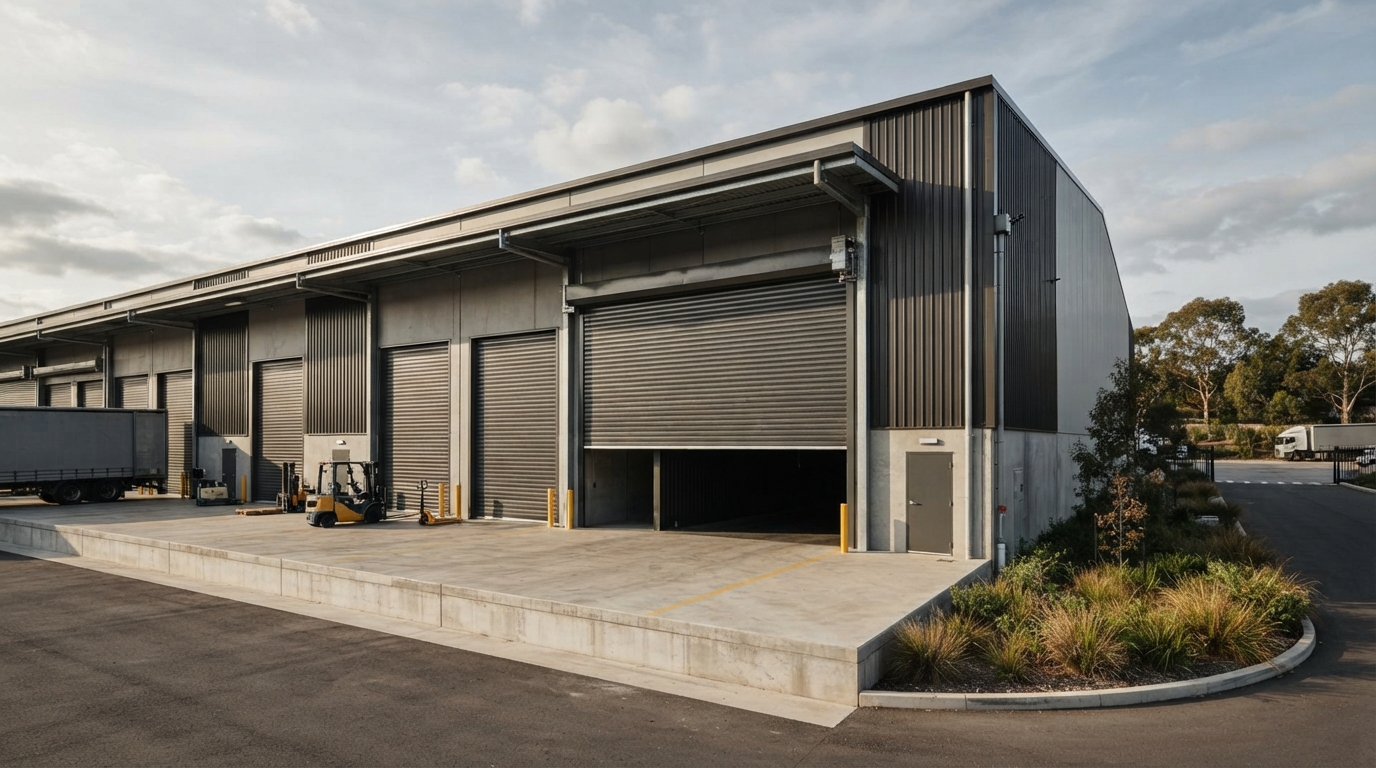
A warehouse is more than a place to store products. It may contain expensive machinery, raw materials, finished goods and equipment, while its large entrances provide constant access for staff, vehicles and deliveries. That combination creates unique security challenges. Security shutters for warehouses and industrial buildings can help protect vulnerable openings while supporting everyday operations, weather protection, fire safety and controlled access.
Why Do Warehouses Need Security Shutters?
Industrial properties are rarely designed around small entrances. They often have loading bays, wide vehicle doors, service entrances and several access points throughout the building. These openings are essential for business operations, but they can also become weak points in a property’s security.
Industrial security shutters provide a physical barrier that can be closed when an entrance is not being used. This can make unauthorized access more difficult and provide an additional layer of break-in protection.
The need is particularly important for manufacturing facilities, distribution centres, e-commerce warehouses and businesses storing high-value inventory. A successful break-in can result in more than stolen goods. Damaged equipment, interrupted deliveries and lost working hours can create significant downtime.
A well-designed shutter system therefore needs to protect the premises without making normal warehouse activity unnecessarily difficult.
Where Can Industrial Security Shutters Be Used?
One of the advantages of industrial shutters is their flexibility. They can be designed for different opening sizes and applications across warehouses and other industrial buildings.
Loading Bays
Loading areas are among the busiest parts of a warehouse. Goods may be moved continuously throughout the day, meaning the door could be opened and closed hundreds of times.
Loading bay shutters need to cope with this demanding environment. The shutter, motor and control system should be selected according to the expected frequency of operation.
When the loading bay is inactive, the shutter provides loading dock protection. During working hours, it can be opened quickly to allow vehicles and goods to move through without unnecessary delays.
Service Doors
Not every access point is large enough for a vehicle. Service doors and pedestrian entrances can also require additional protection, particularly if they provide access to storage areas, workshops or offices.
These smaller openings should be included when reviewing the security of an entire facility rather than focusing only on the main warehouse entrance.
Large Openings
Industrial premises frequently contain openings that are far wider or taller than those found in standard commercial buildings.
This makes oversized door security an important consideration. A shutter needs to be structurally appropriate for the opening and capable of operating reliably at the required size.
For unusual dimensions, custom-sized shutters and custom fabrication can provide a more suitable solution than attempting to adapt a standard door.
Types of Security Shutters for Industrial Buildings
There is no universal shutter design for every industrial application. Material, construction, operating frequency and environmental conditions should all be considered.
Heavy-Duty Roller Shutters
Heavy-duty roller shutters are designed for environments where durability is a priority. They can be used across warehouses, factories, workshops, loading areas and other demanding industrial applications.
Their robust construction makes them suitable for areas that experience frequent use or require increased resistance to physical impact.
Steel Roller Shutters
Steel roller shutters are commonly considered where strength is a major concern. Galvanised steel can provide a durable foundation for industrial shutter systems and may be appropriate for demanding external applications.
Steel systems can be particularly useful where a business is concerned about deliberate damage, unauthorized access or the protection of valuable assets.
Aluminium Roller Shutters
Aluminium roller shutters offer a different balance of properties. Heavy-gauge aluminium can provide strength while keeping the overall shutter lighter than some steel alternatives.
Aluminium can also be useful in environments where corrosion resistance is important. The right choice depends on the opening, security requirements and surrounding conditions.
Perforated Shutters and Roller Grilles
Not every opening requires a completely solid barrier.
Perforated shutters and roller grilles can provide security while allowing some visibility and airflow. These systems may be suitable where the business wants to maintain an open appearance or monitor an area while the barrier is closed.
The level of protection required should determine whether an open-profile design is appropriate.
Polycarbonate Shutters
Polycarbonate shutters can be considered where transparency or visibility is desirable alongside protection. Their application depends heavily on the type of building, level of risk and performance required.
For particularly demanding warehouse environments, other heavy-duty materials may be more appropriate.
Insulated Shutters
Some industrial buildings have environmental requirements in addition to security concerns.
Insulated shutters can help reduce heat transfer through large openings and may contribute to better thermal efficiency. This can be valuable in temperature-sensitive facilities, particularly where doors are opened frequently.
Security Benefits of Industrial Shutters
The primary purpose of a warehouse shutter is to strengthen physical security.
When closed, the shutter creates a barrier across the opening. Depending on its specification, construction and locking arrangement, it can make unauthorized entry considerably more difficult.
Protection Against Forced Entry
A vulnerable opening can provide an intruder with a direct route into a warehouse. A properly specified shutter adds another obstacle between the outside and the protected area.
Security locks can further strengthen the system, although the overall security of the building should not depend on the shutter alone.
For properties with substantial security requirements, shutters can work alongside CCTV, intruder alarms, lighting and access control.
Protecting High-Value Inventory
The financial impact of a warehouse break-in can extend well beyond the value of missing products.
Some businesses store expensive electronics, machinery, specialist equipment, pharmaceuticals, tools or other valuable goods. Protecting these assets requires attention to every potential route into the building.
A security risk assessment can help identify which entrances require stronger protection and whether different shutter types are appropriate for different areas.
Securing Multiple Entry Points
A warehouse may have several access routes, including:
- Main vehicle entrances
- Loading bays
- Service doors
- Rear entrances
- Storage areas
- Emergency access points
Each opening should be considered within the property’s wider commercial security plan.
Industrial Shutters and Everyday Operations
Security equipment should not create unnecessary obstacles for employees.
A busy warehouse may need to move vehicles, pallets and goods through its doors throughout the day. This makes operating speed, reliability and durability important considerations.
Motorized Operation
Motorized operation can make large shutters easier to control. Instead of manually raising a heavy curtain, staff can operate the system using appropriate controls.
For large openings, automation can improve convenience and reduce the physical effort required from employees.
High-Cycle Motors
A warehouse with high-volume access needs equipment designed for repeated operation.
High-cycle motors can be appropriate where a shutter is opened and closed frequently. Selecting equipment according to the expected number of cycles can help prevent premature wear and operational problems.
This is particularly relevant for distribution centres and e-commerce fulfilment facilities where fast movement of goods is essential.
Weather Resistance for Industrial Premises
Many warehouse shutters are installed on external openings, meaning they are exposed to the weather throughout the year.
A suitable system can provide weather resistance against rain, wind, dust and other external conditions. This can be particularly useful around loading bays where weather can otherwise enter the building during deliveries.
For exposed industrial sites, wind-rated shutters may be worth considering. The required specification depends on the building’s location, dimensions and level of exposure.
Weather performance should therefore be considered alongside security rather than treated as a completely separate issue.
Energy Efficiency and Temperature Control
Large doors can have a noticeable effect on internal conditions. Every time an external warehouse door opens, outside air can enter and conditioned air can escape.
For facilities where temperature control matters, this can become an operational concern.
Insulated shutters can provide additional resistance to heat transfer and may improve the insulation value of a large opening. This can be especially relevant to cold storage, food facilities and other temperature-sensitive environments.
Improving energy efficiency does not mean a shutter alone will solve a building’s energy requirements. However, selecting the appropriate door system can contribute to the overall thermal performance of the facility.
Fire Safety and Building Regulations
Security is important, but it should never be considered separately from safety.
Certain industrial buildings require fire-rated shutters to help limit the spread of fire between designated areas. These systems have specific performance requirements and should be selected according to the building’s fire strategy.
Fire safety considerations may include compartmentation, escape routes and the relationship between shutters and other fire-protection measures.
Building regulations and applicable standards should always be checked before specifying a fire-rated system. A conventional security shutter should not automatically be assumed to provide fire protection.
Emergency exits require particular care. Any security system installed around an emergency exit must support safe evacuation rather than obstruct it.
The Importance of Door System Design
Industrial shutter installation is not simply a matter of measuring an opening and attaching a door.
The overall door system design should account for the building structure, opening dimensions, shutter weight, motor, guides, controls, locking arrangements and expected usage.
A warehouse with a large vehicle entrance may require a completely different configuration from a small service entrance.
This is why custom fabrication can be valuable for industrial properties. A shutter designed around the actual opening and operating environment can provide a more appropriate long-term solution.
Installation, Maintenance and Emergency Repair
Even a high-quality shutter can cause problems when installation is poorly executed.
Professional installation helps ensure that the guides, curtain, motor, controls and locking mechanisms work together correctly. It can also help identify structural limitations before the system is fitted.
Maintenance is equally important.
Industrial shutters are exposed to repeated movement and demanding conditions. Regular maintenance can help identify worn components, damaged guides, motor problems or locking issues before they become serious failures.
For businesses operating continuously, access to emergency repair can also be important. A failed shutter at a critical loading bay could prevent deliveries, restrict vehicle movement and increase security risks.
Preventive maintenance can therefore be viewed as an operational investment rather than simply another business expense.
How Should You Choose Security Shutters for a Warehouse?
The starting point should be the building itself.
Begin with a security risk assessment. Identify valuable assets, vulnerable openings, areas with limited visibility and the consequences of unauthorized access.
Then consider how each door will be used. A rarely opened service entrance does not have the same requirements as a loading bay used throughout the day.
The environment should also influence the decision. Consider wind exposure, rainfall, corrosion, temperature requirements and whether the shutter needs to provide insulation.
Finally, consider safety and compliance. Fire-rated requirements, emergency exits, access control and relevant building regulations should all be incorporated into the planning stage.
The goal is not necessarily to install the strongest shutter available everywhere. It is to select the appropriate system for each opening.
Are Security Shutters a Good Investment for Industrial Buildings?
For many businesses, the value of industrial shutters extends well beyond theft prevention.
They can help protect stock and equipment, secure large entrances, improve weather resistance, support temperature control and contribute to efficient warehouse operations.
The most effective solution is one that balances these requirements. A shutter that provides excellent security but cannot cope with the site’s daily operating cycle may become a source of downtime. Likewise, an inexpensive system that is not suitable for a large industrial opening may require costly replacement later.
Good door system design, appropriate materials, professional installation and ongoing maintenance are therefore just as important as the shutter itself.
Frequently Asked Questions
What type of shutter is best for a warehouse?
The best option depends on the warehouse’s opening size, security requirements, operating frequency and environment. Heavy-duty steel, aluminium, insulated, perforated and fire-rated systems can each serve different purposes.
Are steel shutters stronger than aluminium shutters?
Steel generally offers excellent strength and durability, while aluminium can provide a lighter solution with useful corrosion resistance. The appropriate material depends on the application.
Can shutters be installed on large warehouse entrances?
Yes. Industrial shutter systems can be manufactured for large openings. Custom sizing and professional structural assessment may be necessary for oversized doors.
Are security shutters suitable for loading bays?
Yes. Loading bays are a common application. Where doors experience frequent use, motorized systems and high-cycle components can be considered.
Do warehouse shutters help with energy efficiency?
Insulated shutter systems can reduce heat transfer through large openings and may support energy efficiency, particularly in temperature-controlled environments.
How often should industrial shutters be maintained?
Maintenance requirements depend on the shutter type and frequency of operation. High-use industrial systems generally require closer attention than rarely used doors.
Bottom Line
Security shutters for warehouses and industrial buildings can provide a valuable combination of protection, durability and operational practicality. From loading bay shutters and heavy-duty roller systems to insulated and fire-rated options, the right choice depends on the building’s specific needs. A proper risk assessment, suitable door design, professional installation and regular maintenance can help businesses secure vulnerable openings while keeping warehouse operations running efficiently.