Choosing window coverings becomes a little more complicated when young children are part of the household. Parents need to think about more than appearance and privacy—they also need to consider cords, moving parts, accessible hardware, and the overall window environment. Child-safe security shutter systems can offer a practical solution by combining thoughtful safety features with privacy, light control, and window protection. The key is choosing the right design and installing it correctly.
What Makes a Security Shutter Child-Safe?
A shutter isn’t automatically child-safe simply because it is sturdy or made for residential use. Child safety depends on the design of the entire system and how it is installed and used.
The best child-safe shutters are designed to minimize hazards that children can reach or interact with. That can include eliminating dangling operating cords, reducing accessible chains, using secure hardware, and choosing operating mechanisms that are appropriate for the room.
Parents should also consider the child’s age and the location of the window. A shutter installed in a nursery may have different considerations from one installed in a teenager’s bedroom or a family living room.
Features such as cordless design, secure mounting, concealed hardware, and appropriate operating controls can all contribute to a safer window environment. Professional fitting and regular maintenance are equally important because even a well-designed product can become a safety concern if components become loose or damaged.
Why Window Covering Safety Matters in Homes With Children
Windows are an important part of any home, but the coverings around them can introduce hazards that parents may not immediately notice.
Traditional window coverings can sometimes include cords, chains, loops, or other operating components. If these are accessible to young children, they can create potential strangulation hazards or entanglement risks.
That is why window safety should be considered when planning a child’s bedroom, nursery, playroom, or any area where young children spend significant time.
Child-proofing a home isn’t about removing every possible object or restricting children from using rooms normally. It is about identifying foreseeable hazards and reducing unnecessary risks. Choosing child-safe window treatments with simpler operating mechanisms can be one part of that process.
Furniture placement matters, too. A chair, bed, or toy box positioned directly beside a window can give a child access to a control that would otherwise be out of reach. The entire area around the window should therefore be considered rather than focusing only on the shutter itself.
How Cordless Design Improves Window Safety
One of the most useful features for families is a cordless design.
Cord-free shutters remove the dangling operating cords associated with some traditional blinds and shades. This can simplify the area around a window and reduce one category of potential entanglement or strangulation risk.
Instead of pulling a cord, the shutter may be operated through the louvres, a concealed mechanism, a handle, or another purpose-designed control. The exact method varies between products, so parents should look at how the system actually operates before making a purchase.
Cordless operation can be particularly appealing in children’s bedrooms and nurseries, where reducing accessible cords is an important part of child-proofing.
It is still important to remember that eliminating cords does not make the entire window area risk-free. Children can interact with louvres, furniture, locks, handles, and other parts of the room. A safer approach considers the complete environment.
Child Safety Features to Look for in Shutter Systems
When comparing child safety features, look beyond the basic appearance of the shutter.
Finger-Safe Louvres
Louvres should move smoothly and predictably. Finger-safe louvres can help reduce concerns around accessible moving parts, particularly for younger children who are naturally curious and likely to touch or manipulate anything within reach.
The design and construction of the louvres matter, as does the way they are operated. Parents should follow the manufacturer’s recommendations for use and avoid assuming that all shutter designs have identical safety characteristics.
Secure Locking Systems
A secure locking system helps keep the shutter in its intended position. Good hardware can also prevent unnecessary movement or tampering.
The locking mechanism should be appropriate for the shutter and window configuration. Parents should also make sure that any controls or accessible hardware are positioned appropriately for the room.
Concealed Hinges and Hardware
Concealed hinges can reduce the amount of hardware that is exposed around the shutter. Apart from creating a cleaner appearance, concealed components can help minimize the number of small or moving parts that children can access.
Again, this is only one consideration. The overall shutter design, installation, and surrounding window area all contribute to practical window safety.
Are Motorised Shutters Safe for Homes With Children?
Motorised shutters can be an attractive option for families because they can eliminate the need for traditional pull cords.
Depending on the system, shutters may be operated using a wall switch, remote control, smartphone, or automated schedule. This can make opening and closing large or multiple shutters considerably easier.
However, motorisation should not automatically be treated as a guarantee of child safety.
Remote controls and wall switches still need to be considered. A control placed where a small child can easily access it may create a different type of concern. Electrical installation should also be handled appropriately, and parents should follow the manufacturer’s instructions.
When selected and installed correctly, motorised operation can be a useful part of a child-friendly window treatment strategy, particularly when reducing accessible cords is a priority.
Choosing Safe Materials for Children’s Spaces
The materials used in a shutter can make a difference in busy family environments.
Children’s rooms often experience more wear and tear than adults expect. Toys, furniture, repeated opening and closing, and everyday activity can all put stress on window treatments.
Choosing products made from durable materials can help the shutters withstand normal household use. Parents may also want to consider the finish and construction of the product rather than choosing solely on appearance.
Another consideration is the use of non-toxic materials and finishes. When selecting shutters for a nursery or child’s bedroom, check the manufacturer’s specifications and product information rather than assuming every product uses the same materials or coatings.
The goal is a product that is practical, durable, and appropriate for the environment where it will be installed.
Easy-to-Clean Surfaces for Busy Family Homes
Children can make a room messy surprisingly quickly, so easy maintenance is another practical advantage of shutters.
Shutters with smooth, easy-to-clean surfaces can generally be wiped down as part of a normal household cleaning routine. This can be useful in children’s bedrooms, playrooms, kitchens, and family areas.
Regular cleaning also gives parents an opportunity to inspect the shutters. While wiping the surface, they may notice a loose hinge, damaged louvre, unusual movement, or other issue that needs attention.
This makes maintenance more than appearance. Keeping the shutter in good working condition can help preserve safe and predictable operation.
Child-Safe Shutters Can Also Provide Window Protection
Child safety is one consideration, but homeowners may also want their window treatment to provide additional protection.
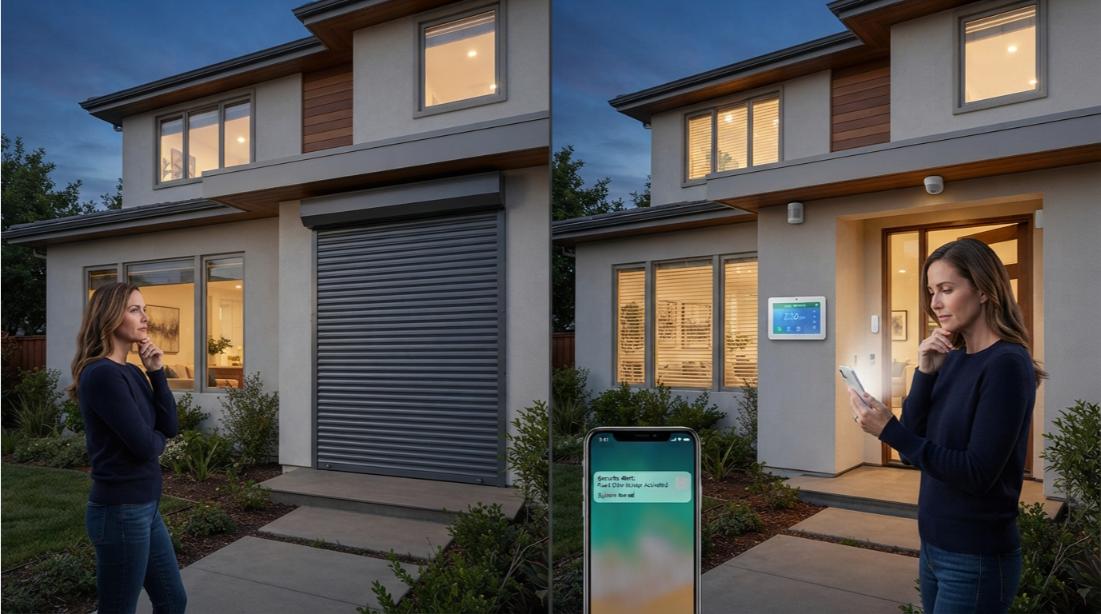
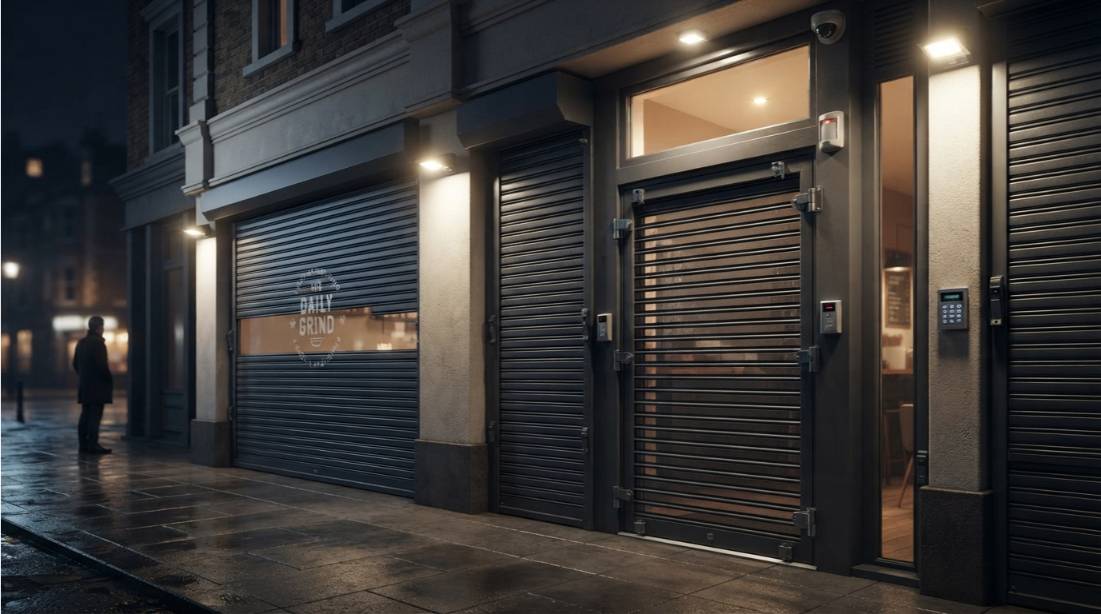
Security-focused shutters can create a physical barrier over vulnerable openings when closed. Depending on the product, they may contribute to window protection against weather, impact, vandalism, or unauthorized access.
It’s important not to confuse every interior child-safe shutter with a security shutter. A plantation-style shutter designed primarily for privacy and light control does not necessarily provide the same level of physical security as a purpose-built security system.
If security is an important requirement, homeowners should select a product specifically designed for that application and discuss the property’s needs with the manufacturer or qualified installer.
Privacy and Light Control for Children’s Rooms
Children’s rooms often need flexible control over both privacy and daylight.
Adjustable shutters can provide useful privacy by reducing visibility into the room without necessarily blocking the window completely. This can be particularly valuable for bedrooms facing streets, sidewalks, or neighboring properties.
Light control is another benefit. Parents may want a darker environment during naps or bedtime while still being able to open the louvres during the day.
Adjustable louvres allow the amount and direction of incoming light to be changed throughout the day. This makes shutters a practical alternative to window treatments that offer limited control once installed.
These features also mean that child-safe shutters don’t have to look like a compromise. A product can contribute to a safer environment while still fitting naturally into the home’s interior design.
Why Professional Installation Matters
Even the best safety features can be undermined by poor installation.
Professional installation helps ensure that the shutter is securely mounted, properly aligned, and operating as intended. The installer can also identify issues related to the window frame, surrounding structure, hinges, locks, and other components.
This is particularly important in homes with young children. A loose or poorly fitted shutter can create problems that aren’t obvious when the product is first installed.
Parents should also follow the manufacturer’s installation and safety guidance. If the product requires periodic adjustment or servicing, those recommendations shouldn’t be ignored.
Maintenance and Regular Safety Checks
Child safety doesn’t end on installation day.
Parents should periodically inspect the shutter and check that louvres move normally, hinges remain secure, locking systems function correctly, and there are no loose or damaged components.
For motorised shutters, controls and operating systems should also be checked according to the manufacturer’s recommendations.
If something feels unusually loose, sticks during operation, makes an unexpected noise, or shows visible damage, it is better to investigate rather than continue using it as normal.
Regular maintenance can help preserve the intended operation of the system and identify potential problems before they become more serious.
Where Are Child-Safe Security Shutters Most Useful?
Child-safe shutters can be useful throughout the home, but certain rooms may benefit particularly from their design.
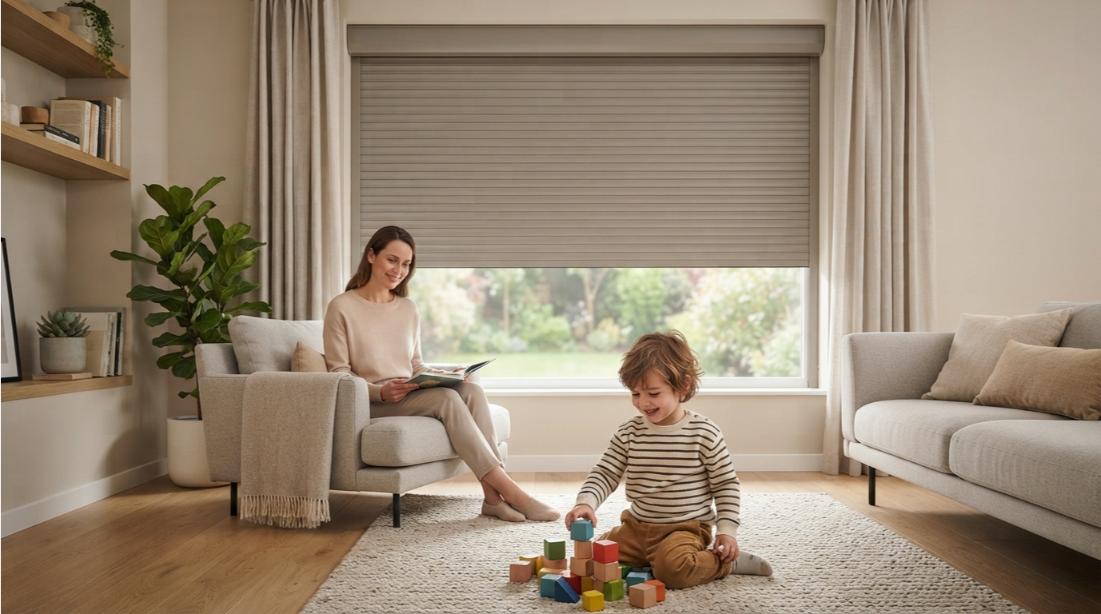
In children’s bedrooms and nurseries, cordless operation can help reduce accessible cords while privacy and light control make the shutters practical for sleeping areas.
In playrooms, durable materials and easy-to-clean surfaces can be valuable because these spaces tend to experience heavy everyday use.
Family living areas may benefit from the combination of privacy, light control, simple operation, and window protection.
The right solution depends on the room and the child’s age. A shutter that works well in one part of the home may not be appropriate for every window.
Common Mistakes to Avoid When Child-Proofing Windows
One of the most common mistakes is assuming that every shutter is automatically safe for children. Product design varies considerably, so parents should examine the operating mechanism and accessible components.
Another mistake is focusing only on the window covering while ignoring the surrounding furniture. A child who can climb onto a bed, chair, or storage box may be able to reach a control that would otherwise be inaccessible.
It is also easy to overlook maintenance. Loose hardware, damaged louvres, or malfunctioning mechanisms can change how a shutter operates.
Finally, parents should avoid treating the term “child-safe” as meaning completely risk-free. Children grow quickly and their ability to reach, climb, and interact with household objects changes over time. Regularly reassessing the room is an important part of ongoing child-proofing.
How to Choose a Child-Safe Security Shutter System
Start by looking at the specific window and the child who will use the room.
Consider whether you need a cordless design, motorised operation, or a simple manually operated system. Look at accessible components and determine whether the controls, louvres, hinges, or locks could be reached by a child.
Then consider the material. Durable materials, easy-to-clean finishes, and appropriate non-toxic materials may be important for family spaces.
Think about the room’s other requirements, too. Does it need strong privacy? Do you need flexible light control? Is additional window protection required? Would automated operation make daily use easier?
Finally, consider professional installation and ongoing maintenance. A good product needs to be securely fitted and kept in proper working condition throughout its service life.
Are Child-Safe Shutters Completely Risk-Free?
No window covering should be described as completely risk-free.
The term child-safe generally refers to design features intended to reduce particular hazards, such as accessible cords or certain operating mechanisms. It doesn’t eliminate every possible risk within a room.
Children’s ages, abilities, furniture placement, window height, and the specific shutter design all matter.
Parents should follow the manufacturer’s safety instructions and regularly reassess the window area as their child grows. A setup that is appropriate for a toddler may need to be reconsidered when that child becomes more mobile and independent.
FAQs About Child-Safe Security Shutter Systems
Are shutters safer than blinds for children?
Some shutter designs can reduce risks associated with cords and chains because they can operate without dangling cords. However, safety depends on the specific product, its installation, accessible components, and the surrounding environment.
Are cordless shutters better for child safety?
A cord-free shutter can remove one common category of hazard associated with accessible window-covering cords. It is still important to consider other components, furniture placement, and the manufacturer’s safety guidance.
What are the most important child safety features in shutters?
Important considerations can include cordless operation, secure hardware, appropriate louvre design, concealed components, safe operating controls, secure installation, and regular maintenance.
Are motorised shutters safe around children?
Motorised shutters can reduce the need for accessible pull cords, but they are not automatically risk-free. Controls, installation, electrical components, and the specific product design should all be considered.
How often should child-safe shutters be maintained?
Follow the manufacturer’s maintenance recommendations and inspect the shutters regularly for loose, damaged, or malfunctioning components. Any issue that affects safe operation should be addressed promptly.
Can shutters provide privacy in children’s bedrooms?
Yes. Adjustable louvres can allow parents to manage visibility into a room while still providing access to natural light when desired.
Do child-safe shutters also protect windows?
Some security-focused shutters can provide physical window protection, but not every child-safe interior shutter is designed to resist forced entry or impact. Always check the product’s intended application.
Child Safety and Security Should Work Together
Child-safe security shutter systems can provide more than an attractive window covering. With cordless operation, appropriate safety mechanisms, durable materials, secure installation, and regular maintenance, they can help create a more practical environment for families with young children. Privacy and light control add everyday value, while security-focused designs may provide additional window protection. The safest choice ultimately depends on the specific shutter, window, room layout, and needs of the child.