When it comes to home protection, homeowners often compare residential roll shutters with alarm systems. Both can improve residential security, but they work in very different ways. Roll shutters provide a physical barrier over vulnerable windows and doors, while alarms focus on intruder detection, notifications, and monitoring. Understanding that difference makes it easier to decide which security measures fit your property, or whether combining both provides the more complete approach.
Residential Roll Shutters vs Alarm Systems: What’s the Difference?
The simplest way to understand the difference is to look at what happens when someone tries to enter your home.
Residential roll shutters provide physical security.
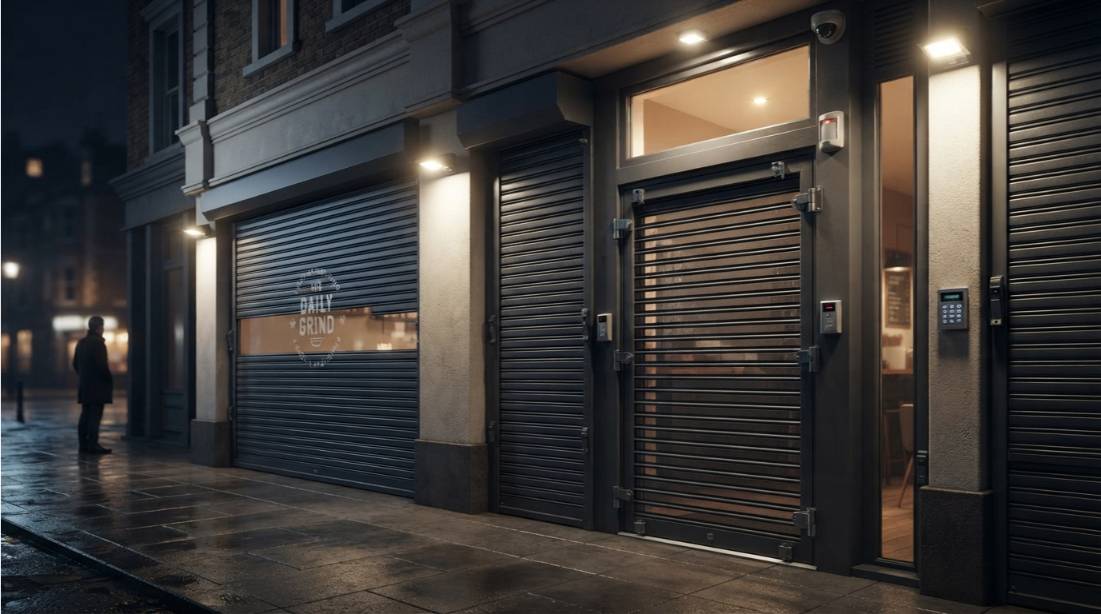
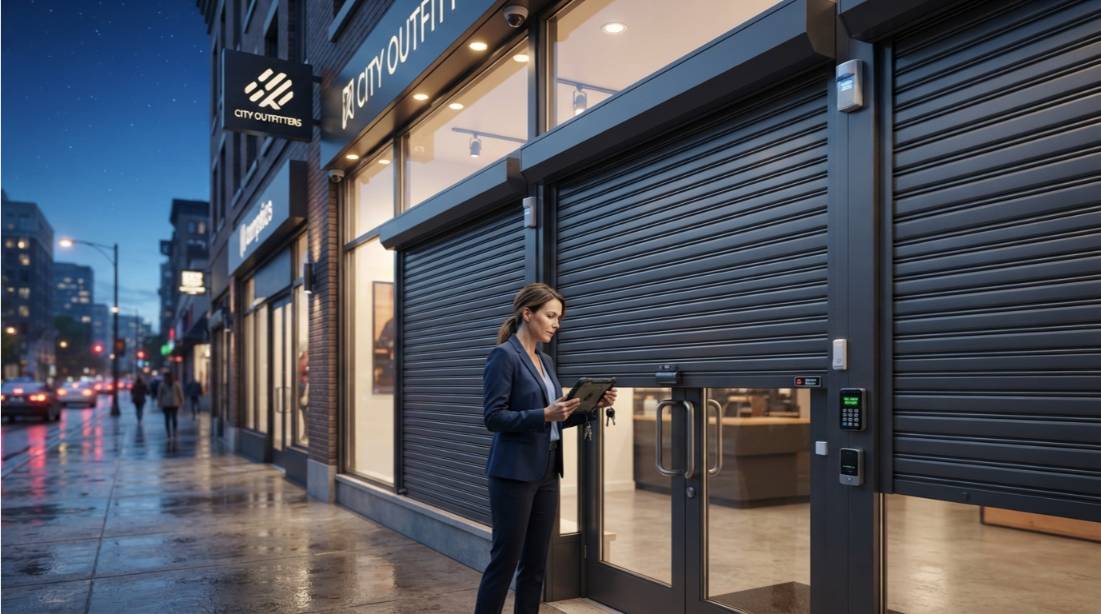
When closed, they create an additional barrier over windows, doors, or other vulnerable openings. Depending on their construction, they can make unauthorized entry more difficult and provide protection against certain types of impact, tampering, and property damage.
Alarm systems provide detection and notification.
Security sensors can monitor doors and windows, while motion detection can identify movement within protected areas. If the system detects suspicious activity, it can trigger alarm notifications and, depending on the setup, connect with professional alarm monitoring.
In other words, shutters are primarily designed to make access harder, while an alarm is designed to tell you when something is happening.
That distinction is important when evaluating home security because physical protection and electronic detection address different parts of the same problem.
How Residential Roll Shutters Protect Your Home
One of the main advantages of residential roll shutters is that they provide a physical layer of protection rather than simply detecting an intrusion.
Windows and doors are common entry points for unauthorized access. Ground-floor windows, patio doors, garage entrances, and secluded side windows can be particularly vulnerable because they may be less visible from the street or neighboring properties.
When security shutters are closed, they create an additional obstacle between an intruder and the underlying opening. Reinforced shutters can make an attempted break-in more difficult and time-consuming, while properly installed tracks, locks, and other components contribute to the overall security of the system.
This is why roll shutters can be considered a first layer of protection. Instead of waiting until someone reaches the glass or door, they add a physical barrier before the intruder gets that far.
How Alarm Systems Protect a Home
Alarm systems take a different approach. Rather than physically blocking an intruder, they use security technology to detect suspicious activity and alert the appropriate people.
Door and window contacts can identify when a protected opening is unexpectedly opened. Motion sensors can detect movement inside designated areas. More advanced systems may combine several types of sensors with cameras, smart locks, lighting, and other connected devices.
Modern alarm systems can also provide alarm notifications through smartphones or connected devices. This can be particularly useful when you’re away from home because you don’t necessarily have to be standing inside the property to know something has happened.
Professional alarm monitoring can add another layer by allowing a monitoring service to receive signals from the security system and respond according to the agreed service.
The major strength of an alarm is therefore awareness. It can tell you that a security event may be taking place, whereas a roll shutter physically protects the opening.
Do Roll Shutters Prevent Break-Ins Better Than Alarms?
It’s tempting to ask which one is simply “better,” but the comparison isn’t quite that straightforward.
Roll shutters and alarm systems work at different stages of a potential break-in. A shutter addresses the physical access point itself. An alarm focuses on identifying and communicating suspicious activity.
For example, imagine someone approaching a ground-floor window.
With an alarm system, a sensor may detect that the window has been opened or disturbed and trigger an alert. With a security shutter, the person encounters an additional physical barrier before reaching the window.
This difference makes roll shutters relevant to break-in prevention, while alarms are particularly relevant to intruder detection and response.
Neither should be treated as an absolute guarantee against burglary. A determined intruder may attempt to defeat physical barriers or electronic security. The goal is to increase protection, discourage opportunistic attempts, make unauthorized entry more difficult, and improve your ability to detect and respond to a security event.
Roll Shutters Offer More Than Security
Another factor often overlooked in the comparison is that residential roll shutters can provide benefits beyond burglary protection.
When closed, shutters can increase privacy by limiting visibility into rooms from outside. This can be useful for bedrooms, living areas, or properties where windows face busy streets.
They can also provide vandalism protection for vulnerable windows and doors. A physical covering may help reduce exposure to certain types of damage that could otherwise leave glass or openings vulnerable.
Depending on the product and installation, shutters can also contribute to weather protection and energy efficiency. By controlling sunlight and adding another layer around a window, they may help with indoor comfort in certain conditions.
These additional functions can make residential shutters useful even when security isn’t the homeowner’s only priority.
What Types of Residential Roll Shutters Are Available?
The best operating style depends on the property, the number of openings being protected, and how frequently the shutters will be used.
Manually operated shutters are straightforward and can be suitable where homeowners want a simple method of opening and closing the system. They don’t necessarily require the same level of electrical infrastructure as motorized options.
Electric roller shutters use a motor to raise and lower the shutter. This can be convenient for larger windows, doors, or multiple openings where manually operating each shutter would become tedious.
Automated shutters can go a step further. Depending on the system, they may be integrated with timers, remote controls, smartphone control, or other smart-home functions. Automation can make it easier to consistently secure the property, particularly when homeowners are traveling or managing several openings.
However, automation itself isn’t what makes a shutter physically secure. Construction, locking mechanisms, installation quality, and suitability for the opening remain important considerations.
What Should You Consider When Choosing Between Roll Shutters and an Alarm?
Start by considering what you actually want the security system to accomplish.
If your main concern is protecting accessible windows and doors, physical security may deserve greater attention. Roll shutters can provide a direct layer of window protection and door protection, particularly at ground level or other easily accessible areas.
If your priority is knowing when someone enters the property, an alarm system may be more relevant. Security sensors, motion detection, smartphone control, and remote monitoring can provide awareness when you’re at work, traveling, or otherwise away from home.
Your property’s layout matters as well. A house with large patio doors and several ground-floor windows presents different security considerations from a property with fewer accessible openings.
Budget should also be considered. Roll shutters typically involve upfront installation costs, while some alarm systems may involve equipment, installation, subscription charges, or ongoing monitoring fees. Both types of systems can require maintenance over time.
Rather than comparing only the initial price, consider what protection and functionality you’re getting over the life of the system.
Roll Shutters vs Alarm Systems: Cost and Maintenance
Cost is often one of the first questions homeowners ask, but there isn’t one fixed price for either option.
For roll shutters, costs can vary according to the number and size of openings, materials, operating mechanism, automation, and installation requirements. Electric and automated systems may have higher upfront costs than basic manually operated shutters.
Maintenance generally involves keeping tracks, locks, motors, and other mechanical components in good working condition.
Alarm systems have a different cost structure. Depending on the system, homeowners may pay for sensors, control equipment, installation, monitoring, batteries, connectivity, or additional smart-home features.
A professionally monitored system can involve ongoing monitoring fees, while other alarm systems may operate without a subscription.
The right comparison is therefore not simply “Which costs less?” but “Which combination of protection, convenience, maintenance, and ongoing costs makes sense for my home?”
Can You Use Roll Shutters and an Alarm System Together?
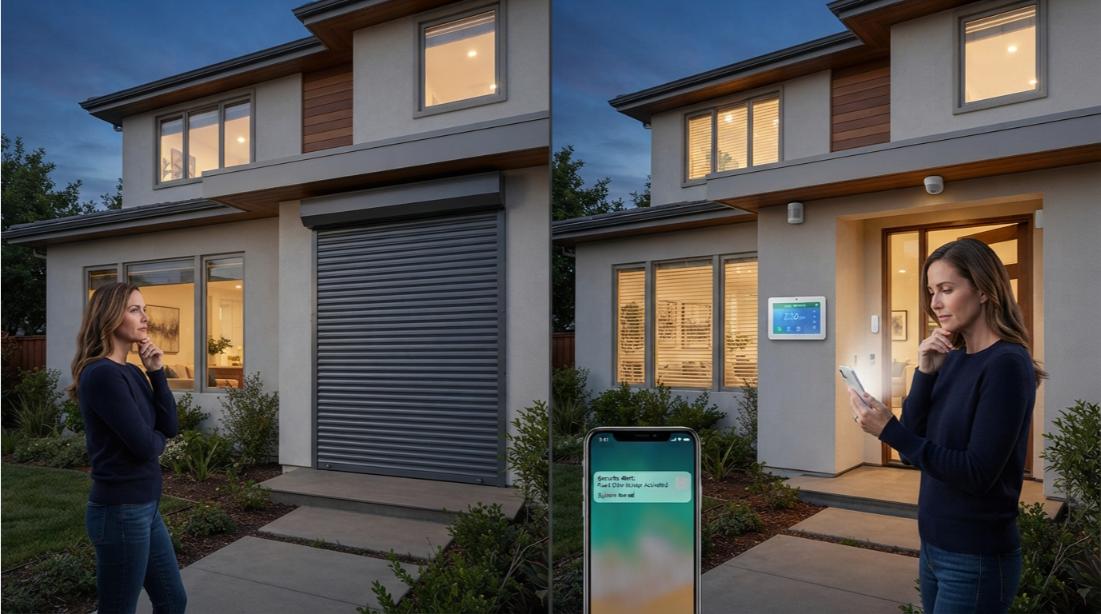
Absolutely. In fact, combining them can create a strong layered security strategy.
Think of the shutter as the physical layer. It protects the window or door and creates an obstacle between the outside and inside of the property.
The alarm becomes the detection layer. Security sensors can monitor doors and windows, while motion detection can provide another form of coverage inside the home.
Notifications then provide an awareness layer. Smartphone control and remote monitoring can help homeowners stay connected to their security system while they’re away.
Finally, other physical measures such as quality deadlocks, secure doors, appropriate window hardware, lighting, and cameras can add further protection.
This approach avoids placing all the responsibility on a single security product. If one layer is challenged, other layers remain in place.
The Role of Quality Deadlocks and Other Physical Security Measures
Roll shutters should be viewed as part of the home’s overall physical security rather than a standalone solution.
Exterior doors should have appropriate locks, including quality deadlocks where suitable. Window hardware should also be secure, particularly on easily accessible windows.
The same principle applies throughout the property: don’t protect one obvious entrance while leaving another accessible opening overlooked.
A burglar doesn’t necessarily need to defeat the strongest security measure on a property if another route provides easier access. Looking at the entire property and identifying vulnerable entry points is therefore an important part of effective home protection.
Which Is Better for Different Home Security Needs?
The answer depends largely on what you’re trying to accomplish.
If your biggest concern is exposed ground-floor windows or patio doors, residential roll shutters can provide direct physical protection. They can also offer privacy, weather protection, and potential energy-efficiency benefits.
If you primarily want immediate alerts when someone enters the property, an alarm system can provide security sensors, motion detection, and alarm notifications.
For homeowners who travel frequently, a combination can be particularly useful. Automated shutters can secure physical openings while smart home security features, remote monitoring, and smartphone control provide information about what’s happening at home.
And if comprehensive property protection is the goal, combining physical barriers, detection, locks, cameras, and monitoring can provide a more complete security strategy than relying on either shutters or alarms alone.
Common Questions About Residential Roll Shutters vs Alarm Systems
Are roll shutters better than alarm systems for home security?
They perform different functions. Roll shutters provide physical security and protect windows and doors, while alarm systems focus on intruder detection, notifications, and monitoring. The appropriate choice depends on the home’s vulnerabilities and the homeowner’s priorities.
Do roll shutters stop burglars?
Security shutters can make unauthorized entry more difficult and may discourage opportunistic intruders, but no security product can guarantee that a determined person will never attempt or succeed at a break-in.
Can I use roll shutters with an alarm system?
Yes. Using both can create layered security. The shutters provide a physical barrier while the alarm provides detection and notification.
Do electric roller shutters work with smart home security?
Compatible electric or automated shutters can potentially integrate with smart-home controls, timers, remote controls, and other connected security technology. Compatibility depends on the specific products and installation.
Are manually operated shutters secure?
A shutter’s security depends primarily on its construction, locking system, installation, and intended application. Manual operation does not automatically mean a shutter is less secure.
Do alarm systems protect windows?
Alarm systems can monitor windows using appropriate security sensors, but they don’t provide the same physical barrier as residential roll shutters.
Do roll shutters provide benefits besides security?
Yes. Depending on the product, they can provide privacy, weather protection, vandalism protection, solar control, and potential energy-efficiency benefits.
Do alarm systems have ongoing costs?
Some professionally monitored systems include ongoing monitoring fees. Other systems may not require a monitoring subscription. Costs depend on the provider, equipment, and services selected.
Bottom Line
Residential roll shutters and alarm systems aren’t necessarily competing solutions. Roll shutters provide physical security, window and door protection, and a first layer against unauthorized entry, while alarms provide detection, notifications, and monitoring. For homeowners seeking broader property protection, combining both with quality locks and other security measures can create layered security. The best approach is one that addresses the property’s specific vulnerabilities while fitting the homeowner’s budget and lifestyle.