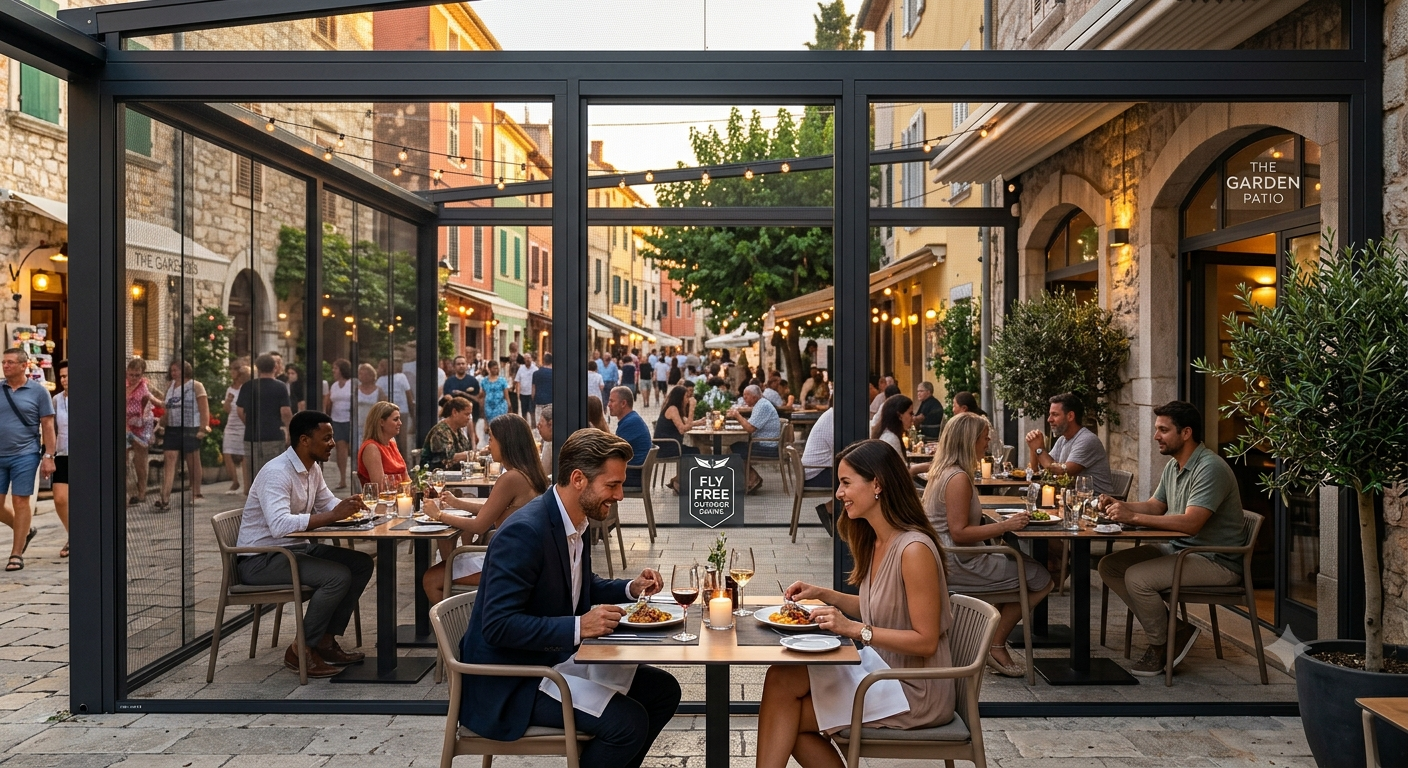
Outdoor dining has become a major part of the modern restaurant experience, giving guests the chance to enjoy fresh air, relaxed surroundings, and a more open atmosphere. At the same time, these spaces come with challenges that can quickly affect comfort and cleanliness. Flies, mosquitoes, wasps, strong sunlight, wind, and changing weather can all interfere with service. Restaurant flyscreens offer a practical way to protect outdoor seating areas while still allowing airflow, visibility, and a pleasant dining environment throughout the year.
Why Restaurants Need Flyscreens
Restaurants are always trying to balance guest comfort, food safety, and seating capacity. Outdoor dining areas can help increase revenue and create a more inviting atmosphere, but they also expose diners and staff to problems that are less common indoors. Flying insects are one of the biggest concerns. Flies, mosquitoes, and wasps can appear quickly, especially during warmer months, and even a small number of insects can make a dining area feel unclean or poorly managed.
Flyscreens help solve this problem by creating a barrier that keeps pests out without closing off the space completely. Unlike solid walls or fully enclosed structures, commercial flyscreens allow restaurants to preserve the open-air feeling that customers enjoy. Fresh air can still move through the space, and guests can continue to enjoy the outdoor setting without constant interruptions from insects.
For cafés, bars, hotels, and busy hospitality venues, flyscreens are more than a convenience. They support a better customer experience, help protect the restaurant’s reputation, and make outdoor dining more practical in everyday service.
Protect Guests from Flying Insects
One of the main reasons restaurants install flyscreens is to create reliable insect protection. Outdoor dining areas naturally attract flying insects, especially when food is being served and lights are on during the evening. Flies are often drawn to food and waste, mosquitoes can become a nuisance in warm or humid conditions, and wasps may be attracted by sweet drinks or exposed dishes. These pests do more than annoy guests. They can also create a negative impression that affects how people view the restaurant as a whole.
High-quality insect screens are designed with fine insect mesh that blocks pests while still allowing airflow and visibility. This means guests can enjoy their meals without constantly waving away insects or worrying about what might land on their table. The dining experience becomes calmer, cleaner, and more enjoyable.
For restaurants that serve food outdoors, pest control is not just about comfort. It is also part of maintaining a professional environment. Flyscreens help reduce the chance of insects entering dining spaces, which supports better hygiene and gives customers greater confidence in the restaurant’s standards.
Improve Food Safety and Hygiene Standards
Food safety is one of the most important responsibilities in any restaurant. Commercial kitchens already follow strict cleaning and handling procedures, but outdoor dining areas need additional protection because they are more exposed to the environment. Open patios, outdoor kitchens, service counters, and buffet areas can all become vulnerable to insects that carry bacteria or contaminate food surfaces.
Restaurant flyscreens provide an extra layer of protection by limiting insect access to these spaces. When installed around outdoor dining areas and food preparation zones, they help support food hygiene practices and reduce the risk of contamination. This is especially valuable in restaurants where food is prepared or plated near open doors, windows, or patio entrances.
Flyscreens are particularly useful around outdoor kitchens, patio service areas, restaurant entrances, food preparation zones, and outdoor buffet stations. In each of these areas, keeping insects away helps maintain hygiene standards and creates a safer environment for both staff and guests. A cleaner space also makes daily operations easier because staff spend less time dealing with pest-related issues and more time focusing on service.
How Flyscreens Improve Outdoor Dining Areas
Outdoor dining is about more than simply placing tables outside. Guests expect a space that feels comfortable, attractive, and easy to enjoy. If insects, heat, glare, or wind become a problem, the appeal of the outdoor area can disappear quickly. Flyscreens help restaurants create a better balance between openness and protection.
Comfortable Outdoor Seating
Outdoor seating areas can become difficult to enjoy when insects are active or when weather conditions make the space less pleasant. Flyscreens help restaurants maintain a more comfortable patio by reducing pest problems without making the area feel closed in. Guests can still enjoy the benefits of being outside, including fresh air and natural surroundings, while avoiding many of the frustrations that come with open-air dining.
This can make a noticeable difference in how long customers stay and how likely they are to return. When people feel comfortable, they are more likely to relax, order more, and enjoy the full dining experience.
Better Airflow and Ventilation
One of the biggest advantages of flyscreens is that they allow continuous airflow. Unlike glass walls or solid barriers, insect mesh protects the space while still supporting ventilation. This is especially important in restaurants where fresh air contributes to a pleasant atmosphere and helps prevent the space from feeling stuffy.
Good airflow also improves comfort during busy service periods. In crowded dining areas, ventilation can help keep temperatures more manageable and create a more enjoyable environment for both guests and staff. Flyscreens make it possible to preserve that open feeling without sacrificing protection.
Maintaining Outdoor Ambiance
Many customers choose outdoor dining because they enjoy the atmosphere. They want visibility, natural light, and a connection to the surrounding environment. A well-designed flyscreen system supports that experience by keeping the view open while reducing the presence of insects and other distractions.
Modern restaurant flyscreens are designed to blend into the space rather than dominate it. This helps preserve the outdoor ambiance that makes patios, terraces, and open seating areas so appealing in the first place. The result is a dining space that feels relaxed, attractive, and practical at the same time.
Types of Flyscreens for Restaurants
Restaurants vary widely in layout, size, and service style, so the right screen system depends on how the space is used. Some areas need a simple fixed solution, while others benefit from flexible or automated systems that can adapt throughout the day.
Fixed Flyscreens
Fixed flyscreens are a straightforward and dependable option for openings that do not need to be accessed constantly. They provide consistent insect protection and are often used for kitchen windows, service openings, and smaller patio sections where a permanent barrier makes sense.
Because they have fewer moving parts, fixed screens are often valued for their simplicity and durability. They are a practical choice for restaurants that want reliable protection with minimal complexity.
Retractable Screens
Retractable screens are one of the most popular choices for restaurant patios and outdoor dining areas because they offer flexibility. These systems can be opened when the weather is pleasant and closed when insects become a problem or when additional protection is needed. When not in use, the screen retracts neatly away, preserving visibility and keeping the space looking clean and open.
Retractable patio screens are especially useful for restaurants that want to adapt their outdoor areas throughout the day or across different seasons. They allow businesses to maintain an inviting atmosphere while still having the option to create a more protected dining environment when needed.
Motorized Screens
Motorized screens provide an even greater level of convenience, particularly for larger restaurants or high-traffic areas. With automated operation, staff can adjust the screens quickly and easily, which is helpful when weather conditions change or when the restaurant needs to shift between open and protected configurations.
These systems are especially effective for large patio openings, outdoor event spaces, and premium dining areas where ease of use matters. Motorized screens offer a polished, professional solution that supports both functionality and guest comfort.
Choosing the Right Screen Material
The material used in a flyscreen system has a major impact on durability, appearance, and performance. Restaurants need materials that can handle frequent use, changing weather, and the demands of a commercial environment.
Insect Mesh
Insect mesh is the core material used in most flyscreens. It is designed to keep flying insects outside while still allowing air to move freely through the space. For restaurants focused on pest control and food safety, insect mesh is often the most important component of the system.
A good insect mesh should be fine enough to block pests without making the space feel dark or enclosed. It should also be durable enough to withstand regular cleaning and daily use.
Solar Mesh
Solar mesh offers additional benefits beyond insect protection. It helps reduce heat buildup by limiting direct sunlight and can also provide UV protection. For restaurants with patios exposed to strong sun, this can make a significant difference in guest comfort.
Solar mesh can reduce glare, lower heat gain, and create a more pleasant environment during the hottest parts of the day. This makes outdoor seating more usable and more appealing to customers who want shade without losing the open-air feel.
Privacy Mesh
Privacy mesh is a useful option for restaurants located in busy streets, commercial districts, or areas where guests may prefer a more secluded dining experience. It reduces visibility from outside while still allowing people inside to enjoy the space.
This type of mesh can help create a calmer, more intimate atmosphere, which is especially valuable for restaurants that want to offer a more refined or relaxed outdoor setting.
Powder-Coated Aluminium Frames
Durability is essential in commercial settings, and powder-coated aluminium frames are a popular choice because they resist corrosion, weather damage, and everyday wear. They are well suited to restaurants where screens are used frequently and exposed to changing conditions.
A strong frame helps keep the screen operating smoothly and supports long-term performance. In a busy restaurant environment, that reliability matters.
Benefits of Commercial Flyscreens
Commercial environments place greater demands on screen systems than residential spaces do. Restaurant doors, patios, and service areas may be used constantly throughout the day, so the screens need to be built for heavy use.
Commercial-Grade Durability
Commercial flyscreens are designed for high-traffic areas where doors and screens may be opened and closed many times each day. They are built with stronger materials and better construction methods so they can handle repeated use without losing performance.
This durability helps reduce maintenance needs and supports long-term value. For restaurants that rely on outdoor dining as part of their business model, a dependable screen system is an important investment.
Custom Screens for Every Restaurant
Every restaurant has a different layout, which is why custom screens are often the best solution. Made-to-measure screens can be designed to fit large patio openings, folding doors, outdoor dining sections, and service areas with precision.
A custom approach ensures better coverage, smoother operation, and a cleaner overall appearance. It also allows the screen system to match the restaurant’s design rather than looking like an afterthought.
Professional Installation
Professional installation plays a major role in how well a flyscreen system performs. Even high-quality materials can underperform if they are not fitted correctly. Proper installation ensures the screens operate smoothly, fit securely, and stand up to daily use.
In commercial settings, expert installation helps protect the investment and reduces the risk of gaps, misalignment, or premature wear. For restaurants, that reliability is essential.
Weather Protection for Outdoor Dining
Outdoor dining areas face more than insect problems. Weather conditions can also affect how comfortable and usable the space feels throughout the day and across the seasons.
Sun Protection and Heat Reduction
Screens with solar mesh can help reduce direct sunlight, glare, and heat buildup. This creates a cooler and more comfortable dining environment, especially during summer or in locations with strong sun exposure.
By improving shade and reducing harsh light, flyscreens can make outdoor seating more appealing during peak daylight hours.
Wind Resistance
Strong winds can make outdoor dining uncomfortable and sometimes even impractical. Durable flyscreens can help reduce wind exposure while still allowing airflow, making the space feel more stable and pleasant for guests.
This added protection can help restaurants keep outdoor areas usable more often, even when conditions are less than ideal.
Rain Protection
Flyscreens are not a complete weather barrier, but certain retractable systems can offer some protection from light rain and help extend the usability of outdoor spaces. This can be especially useful for restaurants that want to keep patio seating available for as much of the year as possible.
Expanding Outdoor Seating Capacity
Many restaurants look for ways to increase revenue without expanding their building footprint. Improving outdoor dining areas is one of the most effective ways to do that. When patios are more comfortable and better protected, they become more valuable as part of the restaurant’s seating plan.
Flyscreens help transform outdoor areas into more functional spaces by making them cleaner, more comfortable, and more appealing to guests. A protected patio can encourage longer visits, better customer satisfaction, and more frequent use across different seasons.
With the right screen system, restaurants can support year-round outdoor dining and make better use of the space they already have. That can lead to stronger seating capacity, improved guest experience, and greater overall value from the outdoor area.
Bottom Line
Flyscreens for restaurants do far more than keep insects away. They help create cleaner, more comfortable, and more inviting outdoor dining spaces while supporting food safety, guest comfort, and better use of seating areas. With options such as retractable screens, motorized systems, and custom-made designs, restaurants can build outdoor spaces that work beautifully throughout the year.