When homeowners start looking for ways to improve comfort, reduce energy costs, and make better use of their indoor and outdoor spaces, flyscreens and solar shades are often two of the most common options they encounter. While they may appear similar at first glance, these products are designed to solve very different problems. Flyscreens focus on keeping insects out while maintaining fresh air and ventilation, whereas solar shades are engineered to reduce heat, glare, and harmful UV exposure. Understanding the differences between these solutions can help you choose the right option for your home, patio, or outdoor living area.
What Are Flyscreens?
Flyscreens, also known as insect screens, are designed to create a protective barrier that prevents mosquitoes, flies, and other insects from entering your home while still allowing fresh air to circulate freely. They are commonly installed on windows, doors, patios, and other openings where homeowners want to enjoy natural ventilation without dealing with unwanted pests.
The effectiveness of flyscreens comes from their finely woven screen mesh. The openings in the mesh are small enough to block insects while remaining open enough to allow airflow and visibility. This simple yet effective design has made flyscreens a popular solution for residential properties in a wide range of climates.
One of the biggest advantages of flyscreens is their ability to improve indoor comfort naturally. Instead of relying solely on air conditioning, homeowners can open windows and doors to encourage airflow throughout the home. This creates a fresher indoor environment while helping reduce dependence on mechanical cooling systems during mild weather.
Materials Used in Flyscreens
Flyscreens are available in several mesh fabric options, each offering unique benefits depending on the application. Fiberglass mesh is one of the most common choices because it is lightweight, flexible, and resistant to corrosion. Polyester mesh is often selected for its durability and ability to withstand frequent use in high-traffic areas. Some modern systems also incorporate PVC-coated fabric for enhanced strength and longevity.
The choice of material can influence factors such as visibility, airflow, durability, and maintenance requirements. Regardless of the material selected, the primary goal remains the same: providing reliable insect protection while preserving fresh air circulation.
Benefits of Flyscreens
Flyscreens offer several practical advantages:
- Effective protection against mosquitoes, flies, and insects
- Improved pest control without chemicals
- Continuous airflow and ventilation for natural cooling
- Clear visibility and preserved outdoor views
- Enhanced home comfort with fresh air circulation
They are especially useful in climates where insects are a persistent issue but natural ventilation is still preferred.
What Are Solar Shades?
Solar shades, often referred to as solar screens, are designed to manage sunlight and heat before they enter a building. Unlike flyscreens, which focus primarily on insect protection, solar shades are engineered to reduce solar heat gain, improve energy efficiency, and create a more comfortable indoor environment.
These systems are commonly installed on exterior windows, patios, covered outdoor spaces, and large glass openings that receive significant sun exposure throughout the day. By filtering sunlight before it reaches the glass, solar shades help maintain more consistent indoor temperatures and reduce the strain on cooling systems.
Solar shades are particularly valuable in regions with intense sunlight and high summer temperatures. They can dramatically improve thermal comfort while helping homeowners lower cooling costs and reduce energy consumption.
Materials Used in Solar Shades
Solar shades are manufactured using specialized materials designed to withstand outdoor conditions while delivering effective solar control. PVC-coated fabric is one of the most widely used materials because it offers excellent durability, UV resistance, and weather performance.
Many solar screens also feature advanced mesh fabrics with varying openness factor ratings. The openness factor determines how much light, visibility, and airflow pass through the material. A lower openness factor generally provides greater heat reduction and privacy, while a higher openness factor allows more natural light and visibility.
These carefully engineered materials allow solar shades to balance multiple performance goals, including heat reduction, glare control, privacy, and view preservation.
Benefits of Solar Shades
Solar shades provide a wide range of advantages that extend beyond simple shade creation. Their ability to manage solar radiation can significantly improve both indoor and outdoor comfort.
Benefits often include:
- Reduced solar heat gain and indoor temperatures
- Enhanced UV protection for occupants and interiors
- Lower cooling costs during warmer months
- Improved energy efficiency
- Reduced glare on televisions, computers, and mobile devices
- Furniture protection and fade protection from prolonged sun exposure
- Increased daytime privacy while maintaining outward visibility
For homes with large windows or extensive sun exposure, solar shades can make a noticeable difference in comfort and energy performance throughout the year.
Flyscreens vs Solar Shades: Key Differences
Although both products involve mesh materials and are often installed in similar locations, their primary functions are very different.
Primary Purpose
Flyscreens are designed to keep insects out while maximizing airflow and ventilation. Solar shades are designed to reduce sunlight, heat, and UV exposure while improving climate control.
| Flyscreens | Solar Shades |
| Insect protection | Heat reduction |
| Ventilation and airflow | Solar radiation control |
| Fresh air circulation | Climate control |
| Pest control | Energy efficiency |
| View preservation | Sun protection and privacy |
Understanding this distinction is the first step toward selecting the right solution for your needs.
Airflow and Ventilation
Ventilation is where flyscreens truly excel. Their mesh design allows fresh air to move freely through windows and doors, helping create a naturally comfortable indoor environment. This can be especially beneficial during spring and fall when outdoor temperatures are pleasant.
Solar shades also allow airflow, particularly when installed as retractable screens on patios and outdoor spaces. However, their primary objective is to reduce sunlight and heat rather than maximize ventilation.
Insect Protection
When it comes to keeping insects out, flyscreens are the clear winner. Their tightly woven screen mesh is specifically designed to prevent mosquitoes, flies, and other pests from entering the home.
Solar shades may provide some barrier against larger insects, but they are not intended to function as dedicated insect screens. Homeowners seeking reliable pest control should prioritize flyscreens for this purpose.
Heat and UV Protection
Solar shades outperform flyscreens when it comes to managing solar heat gain and UV exposure. By blocking a significant portion of solar radiation before it reaches windows and doors, they help maintain cooler indoor temperatures and improve thermal comfort.
Flyscreens provide little protection against heat buildup because their primary purpose is airflow rather than solar control.
Visibility and Natural Light
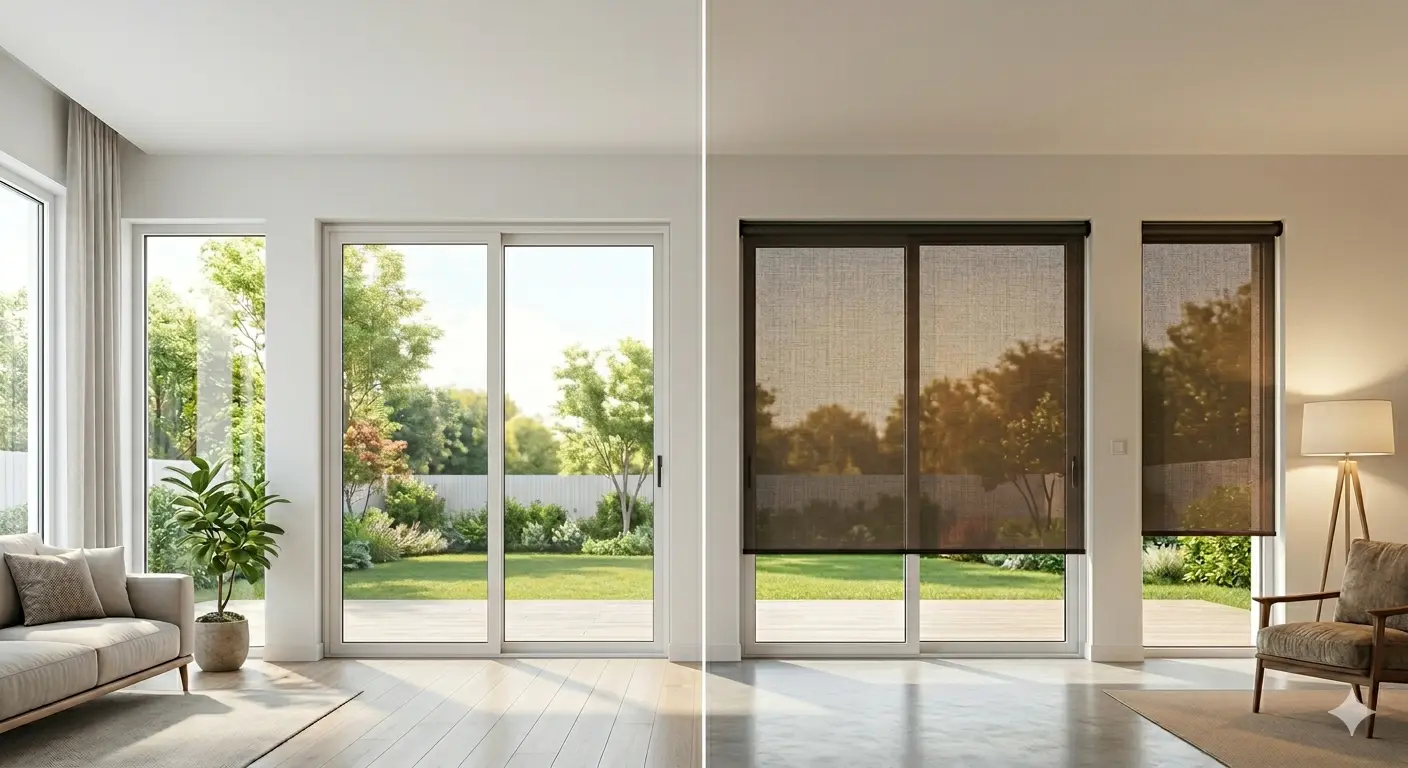
Both products are designed to preserve visibility, but they achieve this in different ways. Flyscreens generally provide a clearer view because their mesh is optimized for transparency and airflow.
Solar shades use varying openness factor ratings to balance visibility with heat reduction. Depending on the fabric selected, they may slightly darken the view while still allowing natural light to enter the space.
Privacy Considerations
Privacy is another area where solar shades have a distinct advantage. Many solar screen fabrics provide daytime privacy by limiting visibility from the outside while maintaining outward views from inside the home.
Flyscreens offer minimal privacy benefits because their mesh is designed primarily for airflow and visibility rather than visual screening.
Energy Efficiency and Cooling Costs
One of the strongest arguments for solar shades is their impact on energy efficiency. By reducing solar heat gain, they help lower indoor temperatures and decrease the workload on air conditioning systems. This often translates into measurable energy savings and reduced cooling costs.
Flyscreens contribute indirectly by encouraging natural ventilation, but they do not provide the same level of climate control or energy performance as solar shades.
Best Use Cases for Outdoor Living Spaces
Outdoor living spaces have become an important extension of the modern home, and both flyscreens and solar shades can play a valuable role in improving comfort.
Flyscreens for Outdoor Areas
Flyscreens are particularly effective in outdoor environments where insects can quickly become a nuisance. They are commonly used on covered patios, screened porches, outdoor kitchens, and seating areas where homeowners want to enjoy fresh air without constant interruptions from mosquitoes and flies.
By creating a protective barrier, flyscreens make outdoor spaces more enjoyable during evenings and warmer seasons when insect activity is highest.
Solar Shades for Outdoor Areas
Solar shades are ideal for patios and outdoor spaces that receive direct sunlight throughout the day. They help reduce glare, lower temperatures, and create a more comfortable environment for dining, entertaining, or relaxing outdoors.
In addition to improving outdoor comfort, solar shades can protect outdoor furniture and finishes from prolonged UV exposure.
Using Both Together
Many homeowners discover that the best solution is not choosing one over the other but combining both systems. Flyscreens provide insect protection and ventilation, while solar shades deliver heat reduction, glare control, and privacy.
Together, they create a more versatile and comfortable outdoor living environment that can be enjoyed throughout the year.
Retractable Screens and Modern Solutions
Advancements in screen technology have introduced more flexible options than traditional fixed installations. Retractable screens and motorized screens allow homeowners to enjoy protection only when needed while preserving unobstructed views when the screens are retracted.
Retractable shade systems are particularly popular for patios, covered outdoor spaces, and large openings. These systems can be customized to fit unique architectural designs and can often be integrated with smart home controls for added convenience.
Motorized screens provide effortless operation and allow homeowners to adjust shading, privacy, and ventilation with the touch of a button. As a result, custom screens have become an increasingly popular choice for modern residential applications.
Choosing the Right Option
The best choice ultimately depends on your priorities and how you plan to use the space.
If your primary concern is keeping insects out while maintaining maximum airflow and fresh air circulation, flyscreens are likely the better solution. They provide reliable pest control while preserving visibility and natural ventilation.
If your goal is reducing heat, improving energy efficiency, lowering cooling costs, and protecting interiors from UV damage, solar shades offer significant advantages. Their ability to manage solar radiation can dramatically improve comfort in both indoor and outdoor environments.
For homeowners seeking the highest level of comfort and functionality, combining flyscreens with solar shades often delivers the most comprehensive solution. This approach provides insect protection, climate control, privacy, and energy savings all at once.
Bottom Line
Flyscreens and solar shades may look similar, but they are designed to address different needs. Flyscreens focus on ventilation, airflow, and insect protection, while solar shades excel at heat reduction, UV protection, privacy, and energy efficiency. By understanding how each system works, homeowners can make a more informed decision and create indoor and outdoor spaces that are comfortable, functional, and enjoyable throughout the year.