It’s one of the most common reasons people hesitate before installing flyscreens, the worry that putting a mesh barrier over your windows means giving up the breeze. It’s a fair question. But the short answer is: not in any way that should put you off. Here’s what’s actually happening when air moves through a screened window, and what genuinely matters for keeping your home well-ventilated.
Do Flyscreens Actually Reduce Airflow?
Honestly, yes, a little. Any physical barrier over a window opening creates some resistance to air movement. That’s just physics. But “a little” is doing a lot of work in that sentence, because in real-world conditions, the difference between an open window with a flyscreen and one without is something most people would never notice.
Research into insect screens consistently shows that a standard screen mesh reduces airflow by somewhere in the range of 10–20% depending on conditions. On a day with even a moderate outdoor breeze, that gap largely disappears, the outdoor air pressure pushing through the mesh overcomes the resistance with ease.
The more important point is this: insect protection isn’t just a comfort feature. It’s what allows you to keep the window open in the first place. Homes without window screens often end up with windows shut during summer evenings, during mosquito season, or whenever insects are bad, which means zero natural ventilation, not 80% of it. A slight reduction in airflow through an open, screened window beats a fully closed one every time.
What Factors Affect How Much Airflow a Flyscreen Reduces?
The airflow impact of a flyscreen isn’t a fixed number, it shifts depending on several variables. Understanding them helps you make better choices at the selection stage.
Mesh density and mesh size
This is the biggest factor. Screen mesh is essentially a grid of open space and material, and the ratio between the two determines how freely air passes through. A coarser mesh with larger openings lets air move with minimal resistance. A finer mesh, the kind used for mosquito protection, has smaller holes, which means more surface area blocking airflow.
Standard insect screens are designed to strike a balance: the mesh size is small enough to keep common insects out, but open enough that ventilation efficiency stays high. If your pest control concern is specifically mosquitoes rather than general insects, you may need a finer mesh, but it’s worth knowing that tradeoff exists before you choose.
Size of the window or door opening
A large screened opening will always outperform a small unscreened one for air circulation. The total volume of air that can pass through depends on the opening’s size, mesh resistance affects the rate, not the capacity. Wide door screens and generously sized window openings compensate naturally for whatever resistance the mesh creates. If airflow is a priority, bigger openings matter more than screen choice.
Screen frame and installation quality
A flyscreen that doesn’t fit properly creates a different kind of problem. Gaps around the frame don’t just let insects in, they disrupt the intended airflow pattern, creating turbulence that actually reduces ventilation efficiency compared to a properly sealed, well-fitted screen. A quality installation that covers the full opening cleanly allows for better air exchange than a loose, ill-fitting one.
Wind speed and outdoor conditions
On a completely still day, any flyscreen will have a more noticeable effect on how much air drifts into the room. There’s simply less outdoor air pressure to push through the mesh. But on most days, particularly the warm, breezy days when you actually want your windows open, the natural ventilation through a screened window is barely distinguishable from one without. The breeze does the work.
Flyscreens vs No Screens – The Real Ventilation Difference
Here’s the comparison that rarely gets made: it’s not screened window vs open window. It’s a screened window vs what actually happens when there’s no screen.
Without flyscreens, a window might be open on cool mornings or during certain times of day. But come evening, when temperatures are still warm and insects are active, that window closes. It stays closed through summer nights. It stays closed during mosquito season. The result is a stuffy indoor environment, poor indoor air quality, and the exact stale air problem that opening the window was meant to solve.
A home with flyscreens on every window and door can stay open around the clock. Fresh air moves through continuously. Air circulation stays consistent. The indoor environment benefits from a constant supply of outdoor air without the pest control compromise.
The small reduction in airflow from the mesh is nothing compared to the airflow gain from being able to leave windows and door screens open for far longer periods. That’s the trade that actually matters.
How to Maximise Airflow With Flyscreens Installed
If you want strong ventilation and insect protection at the same time, a few practical choices make a real difference.
Choose the right mesh for your needs
Don’t over-specify. If your main concern is keeping flies and beetles out, a standard insect screen mesh gives you solid pest control with minimal impact on ventilation. Fine mesh designed for mosquito protection does its job well, but the smaller openings do reduce air movement more noticeably. Match the mesh size to what you actually need, there’s no point accepting reduced airflow for protection you don’t require.
Use cross ventilation strategically
Cross ventilation is one of the most effective tools for natural airflow in any home, and flyscreens don’t change that. Position your open window screens on opposite sides of a room or across the home, and air movement happens naturally as pressure equalises between openings. Even with mesh on every window, a well-designed cross ventilation setup drives a strong, consistent airflow through the indoor environment.
Opt for larger openings where possible
Wide window openings and large door screens are your best ally when ventilation matters. The greater the open area, even accounting for mesh resistance, the more total air exchange happens per hour. Bi-fold doors, sliding doors, and wide window configurations fitted with flyscreens allow the kind of airflow that smaller fixed windows simply can’t match, with or without insect screens in place.
Keep screens clean and maintained
Over time, dust, pollen, and debris accumulate in the screen mesh. This isn’t just a cosmetic issue, a clogged mesh meaningfully reduces ventilation efficiency by blocking the open spaces that air passes through. A quick clean a few times a year restores full air circulation performance and keeps the screen doing what it’s meant to do.
Do Different Screen Types Perform Differently for Airflow?
Not all flyscreens handle ventilation the same way, and the type you choose does make a difference, particularly in homes where airflow is a genuine priority.
Fixed window screens and fixed door screens offer consistent, always-on insect protection. The mesh is always present, which means there’s always some degree of resistance to outdoor air coming in, minimal with a good mesh choice, but present.
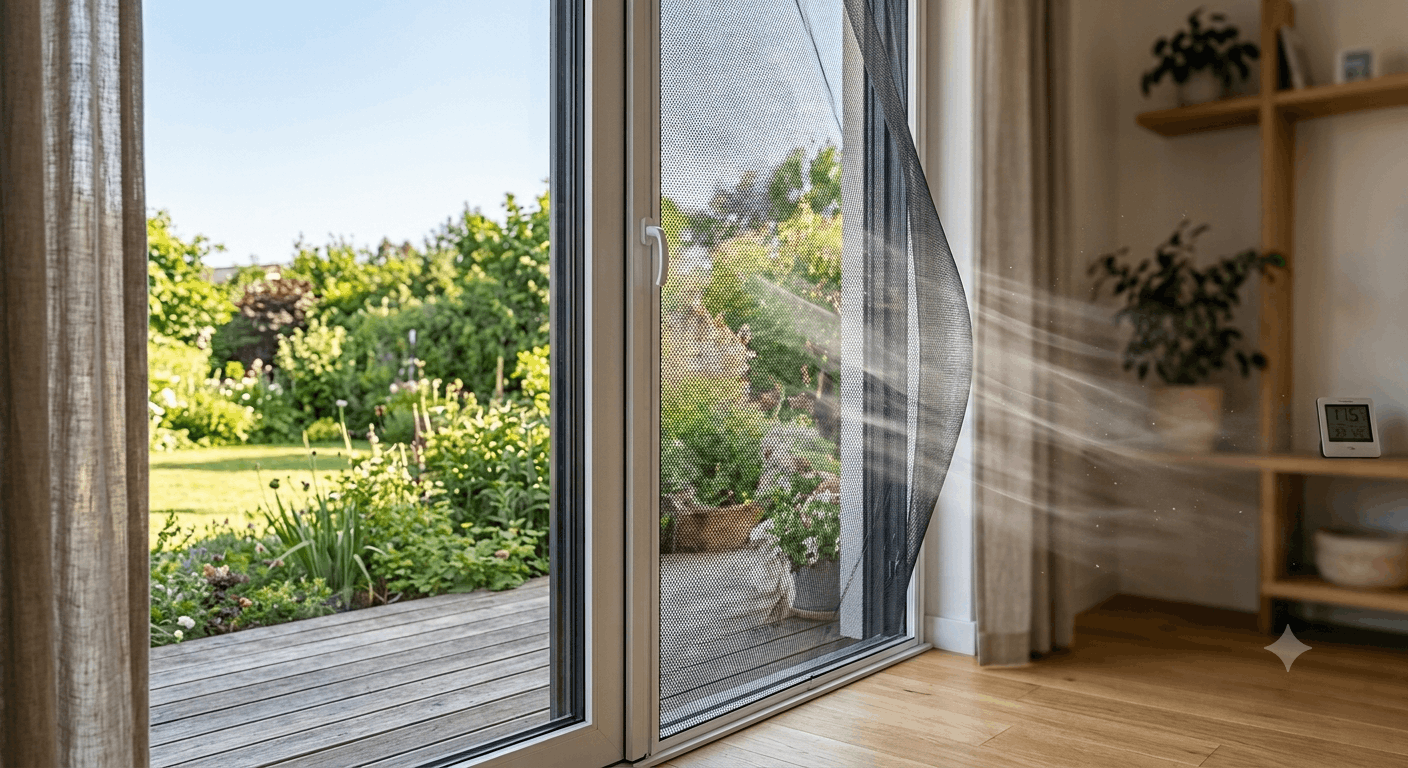
Retractable flyscreens work differently. When they’re deployed, they perform like any other quality insect screen. But when they’re retracted into the housing cassette, the opening is completely clear, no mesh, no frame in the way, no resistance at all. Full fresh air, full outdoor air, complete air exchange with nothing between you and the breeze.
For large architectural openings where maximum ventilation matters, wide patio doors, bi-fold configurations, or open-plan spaces that connect directly to a garden or deck, retractable screens offer a clear advantage. Insect protection when you need it, unrestricted natural ventilation when you don’t.
Talius flyscreens are built with exactly these situations in mind. Whether you’re working with standard window openings or wide, complex door configurations, there’s a screen solution designed to deliver both insect protection and strong ventilation without compromising either.
The Indoor Air Quality Angle
There’s a bigger picture worth mentioning here. The conversation about flyscreens and airflow usually focuses on comfort whether the room feels stuffy. But indoor air quality is a more serious consideration than most people realise.
In a closed home, CO₂ levels rise, humidity builds, and airborne particles accumulate. Regular air exchange with outdoor air is what keeps the indoor environment healthy. Flyscreens make that possible continuously, not just when insects aren’t around, or when it’s early enough in the morning, or when it’s not mosquito season.
Insect screens on windows and door openings allow fresh outdoor air to cycle through the home consistently, diluting stale air and keeping conditions comfortable. The irony is that people concerned about indoor air quality sometimes keep windows closed to avoid insects when the solution that gives them both is a quality flyscreen.
Bottom Line
Flyscreens do create a small amount of mesh resistance, that part is true. But in practice, the effect on natural ventilation is minor, and the far bigger factor is simply keeping windows open more often and for longer. The right mesh size, good cross ventilation habits, and clean, well-fitted screens are all you need to maintain strong airflow and solid insect protection at the same time. The breeze gets through. The bugs don’t.