Most people pick an awning based on looks. That’s usually the wrong starting point. The smarter question is: how do you actually use your outdoor space? Do you want flexibility or permanence? Seasonal adaptability or year-round protection on autopilot? This guide covers both retractable and fixed awnings in full, materials, costs, performance, and who each type is genuinely built for.
What Is a Retractable Awning and How Does It Work?
How It’s Built
A retractable awning extends on demand and rolls back up when you’re done with it. The awning fabric stores inside a cassette, a protective housing, which is the detail that matters most for long-term value. When the fabric isn’t exposed to the sun, it isn’t degrading. The frame is typically aluminum, though steel frame options exist for heavier-duty applications. Most quality fabrics are solution-dyed acrylic, built to resist both moisture and UV rays.
How It Operates
This is where retractable awnings have changed the most in recent years. You can go old-school with a manual awning and a hand crank, perfectly functional, no electrical requirement. Or you can step up to a motorized awning with remote control operation, push-button extension, or full smart home integration through an app or voice assistant.
The smarter models include a wind sensor and sun sensor that automatically retract the awning when conditions change. That matters more than most buyers realize, a sudden storm while you’re away from home won’t mean a destroyed awning if the sensor is doing its job.
Where It’s Used
Retractable awnings are most common as patio awnings, deck awnings, and porch awnings on residential properties. They’re also popular in outdoor dining areas at restaurants and cafes, where the ability to open or close shade on demand makes a real operational difference.
What Is a Fixed Awning and How Does It Work?
How It’s Built
A fixed awning, sometimes called a stationary awning or permanent awning, is exactly what it sounds like. It’s mounted to the building exterior and it stays there. The frame is aluminum or steel for structural rigidity, and the awning fabric is typically a heavy-duty acrylic or canvas material designed for constant outdoor exposure. There’s no cassette, no housing, no moving parts.
How It Operates
It doesn’t. That’s the point. Fixed awnings offer set-and-forget permanent coverage — no buttons, no sensors, no maintenance schedule beyond the basics. For a lot of applications, that simplicity is the whole appeal.
Where It’s Used
Storefront awnings and commercial awnings are the classic use case, retail exteriors, restaurant entrances, cafe fronts. Fixed awnings also work well over individual windows, doorways, and entryways where you need consistent shelter and year-round protection without any interaction from day to day.
Retractable Awning Pros
Full Shade Control on Your Terms
The biggest advantage of a retractable awning is adjustable shade, you extend it when the afternoon sun is brutal and retract it when you want an open sky for evening entertaining. That kind of light control and privacy flexibility is something a fixed awning simply can’t offer.
Protects Itself From Damage
Because the fabric rolls into its protective housing when you’re not using it, you’re dramatically slowing the pace of fabric fading and fabric wear. Pair that with a wind sensor that automatically retracts during storms, and you’re protecting the awning from wind damage before it can happen. That’s a big reason well-maintained retractable awnings routinely hit a 10–15 year lifespan.
Energy Efficiency and Comfort
A retractable awning extended over a south- or west-facing window blocks direct sunlight before it hits the glass, which meaningfully cuts indoor heat gain and reduces air conditioning costs through summer. Retract it in winter, and you get passive solar warmth back. That seasonal adaptability is something fixed awnings can’t replicate.
Protects Outdoor Furniture and Flooring
UV protection extends to everything underneath outdoor furniture, cushions, and any interior flooring near glass doors. Outdoor furniture protection alone is worth something when you’ve invested in quality patio pieces.
Aesthetic Flexibility and Property Value
When retracted, the awning almost disappears. There’s no visual bulk on the building facade. Extended, it adds character. That combination visible when useful, invisible when not enhances curb appeal and increases property value in a way that a permanently mounted structure doesn’t always manage.
Retractable Awning Cons
Higher Upfront Cost
A motorized awning with smart home integration and sensors will cost significantly more than a basic fixed awning upfront cost runs from roughly $1,500 to $6,000 or more depending on size, features, and professional installation requirements. Even a manual awning with a hand crank costs more than a comparably sized fixed model.
Requires More Maintenance
Mechanical components mean more things that can eventually need attention arms, springs, motors, fabric rolls. The fabric must also be fully dry before retracting, or you risk mold and mildew building up inside the cassette. It’s not high-maintenance, but it’s not zero-maintenance either.
Not Built for Extreme Weather
A retractable awning is not a storm shelter. It needs to be retracted before heavy rain, strong wind, or snow arrives. Forgetting that or having a sensor fail can mean real wind damage. Snow load on extended fabric is a genuine risk in colder climates.
Fixed Awning Pros
Always-On Protection
Year-round protection without any effort from you is the fixed awning’s core value proposition. For storefront awnings and commercial awnings, this reliability is often non-negotiable, customers and staff need consistent coverage regardless of who’s around to operate anything.
Built to Handle the Elements
Fixed awnings are engineered for continuous weather resistance. A properly built aluminum frame or steel frame handles snow load, water accumulation, and sustained wind far better than a retractable model can when extended. In high-wind or heavy-snow regions, that structural advantage is real.
Lower Upfront Cost
No mechanical components, no motor, no sensors, that simplicity keeps initial investment lower. DIY installation is even feasible for smaller window and door awnings. For budget-conscious projects or commercial builds with multiple awnings, the cost difference adds up quickly.
Low Maintenance
Occasional fabric cleaning and a periodic frame inspection are about all that’s required. No moving parts to lubricate or service, no sensors to calibrate. Truly set-and-forget.
Fixed Awning Cons
Zero Flexibility
Fixed means fixed. There’s no adjustable shade, no way to open up the sky for a winter afternoon, no seasonal adaptability. For a residential patio where the sun angle and your needs shift constantly, that rigidity gets frustrating.
Faster Fabric Wear
Because the fabric is always exposed, UV rays are always working on it. Even quality acrylic fabric degrades faster under constant sun exposure fabric replacement typically becomes necessary every 8–12 years, compared to the 10–15 year lifespan you get when fabric is stored in protective housing.
Permanent Commitment
Once a fixed awning is up, it’s up. Changing your mind means full removal and reinstallation. It may also require navigating HOA rules, building codes, or permit requirements before you even get started. And if the style choice doesn’t age well, it becomes a curb appeal liability rather than an asset.
Retractable vs Fixed Awnings – At a Glance
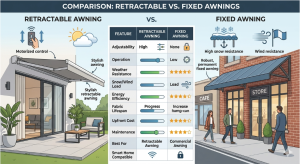
Retractable or Fixed – How to Make the Right Call
Choose a Retractable Awning If…
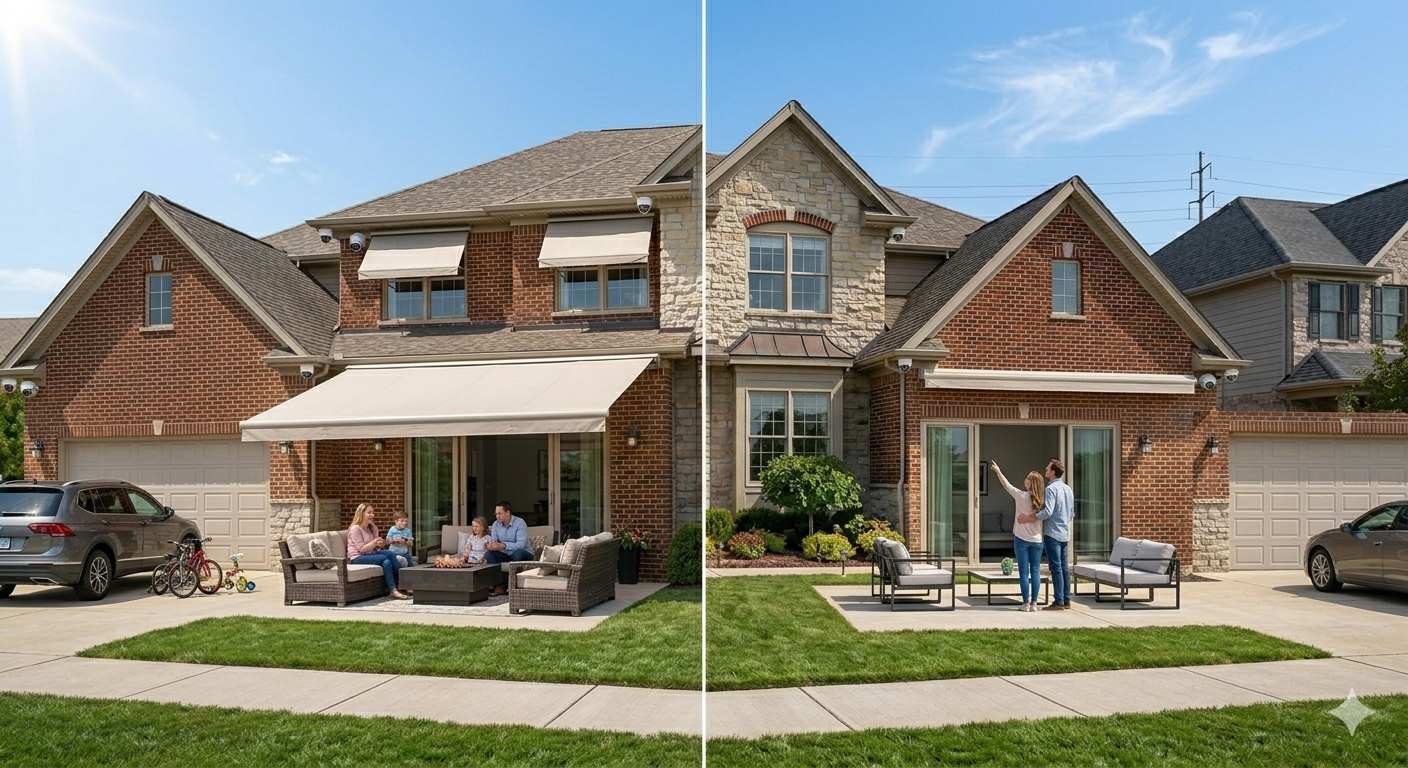
You want adjustable shade control and your outdoor space serves more than one purpose dining some nights, entertaining others, quiet mornings with full sun. If energy efficiency and lower cooling costs matter to you, or you want smart home integration with remote control operation, a retractable awning is the right fit. This is especially true for patio awnings, deck awnings, and porch awnings where sunlight and usage patterns shift constantly.
Choose a Fixed Awning If…
You need year-round protection and zero daily interaction. If you’re outfitting a storefront awning, an outdoor dining area, or a commercial property or if you’re in a region where weather resistance and snow load performance matter more than flexibility a fixed awning is the more reliable, lower-maintenance answer.
Can You Have Both?
Absolutely, and plenty of properties do. Retractable awnings on residential patios for flexibility, fixed awnings over entryways and windows for constant shelter. Talius manufactures both custom solutions for any opening, dimension, or application.
Why Talius Retractable Awnings Stand Apart
Talius designs and manufactures retractable awnings built specifically for North American conditions. Premium aluminum frame construction, protective cassette housing, motorized awning options with remote control operation and smart home integration, it’s all there. Wind sensor and sun sensor options handle automatic retraction so you don’t have to think about it.
The fabric is solution-dyed acrylic that resists both UV rays and fabric fading over time, and custom sizing covers any patio awning, deck awning, porch awning, or commercial awning application. With 40+ years of manufacturing experience and 20,000+ installations across North America, and an authorized dealer network offering professional installation coast to coast, Talius isn’t a new name in this space.
What is the main difference between retractable and fixed awnings?
Retractable awnings extend and retract on demand for adjustable shade control. Fixed awnings are permanently mounted for constant, set-and-forget coverage.
How long do retractable awnings last?
A well-maintained retractable awning typically lasts 10–15 years. Because the fabric stores in a protective cassette when not in use, it avoids the constant UV exposure and fabric fading that shortens fixed awning fabric life.
Are retractable awnings worth the higher upfront cost?
For homeowners who want flexibility, energy savings, and smart home integration, yes. The long-term value comes from energy efficiency gains, fabric lifespan, and the ability to adapt the awning to seasonal needs.
Can a fixed awning handle snow and heavy rain?
Better than a retractable model can. Fixed awnings with properly engineered aluminum or steel frames are built for continuous weather resistance, including snow load and sustained wind. Water accumulation on fabric remains a maintenance concern over time.
Do I need a permit for an awning?
Depends on your location and awning type. Retractable awnings are often treated as temporary structures and may not require permits in many jurisdictions. Fixed or permanent awnings more frequently trigger HOA rules, building codes, or permit requirements. Check with your local authority before installation.
Can retractable awnings integrate with smart home systems?
Yes. Modern motorized awnings connect via app, voice assistant, or home automation hub. Paired with a wind sensor or sun sensor, they respond automatically to changing conditions without any input from you.
The Right Awning Is the One That Fits Your Life
Retractable awnings win on flexibility, energy efficiency, and modern smart features. Fixed awnings win on permanent coverage, low maintenance, and weather resilience. Neither is universally better, the right answer comes down to how you use your outdoor space, where you live, and what you actually need from the product long-term. Talk to a Talius authorized dealer for a free quote on retractable or fixed awning solutions tailored to your property.