Most people think about home security the wrong way. They react after something goes wrong, better locks after a break-in, cameras after a neighbor gets hit. But burglary prevention isn’t about recovery. It’s about making your property the one a burglar walks past. There’s one deterrent that outperforms everything else, and once you understand why it works, the rest of your security decisions get a lot clearer.
How Burglars Actually Choose Their Targets
Before getting into solutions, it helps to understand who you’re actually dealing with.
Most break-ins fall into one of two categories. The opportunistic burglar isn’t planning much — they spot an open window, an unlocked side door, or a property with no visible security and they take their shot. Quick, low-effort, low-risk. The premeditated burglar is more patient. They watch a property, note the patterns, and pick their moment, usually when the house looks empty and the street is quiet.
Here’s what both types have in common: they are avoiding risk. Property crime statistics consistently show that most burglars want to be in and out in under ten minutes. They’re not looking for a challenge. They’re looking for the easiest target on the street.
That’s the insight that should shape every security decision you make. Anything that raises their perceived effort, noise, or chance of getting caught is a deterrent. Anything that makes your property look like a harder job than the one next door is working in your favor.
The most common vulnerable entry points? Ground-floor windows, front and rear entry doors, and garages. These three account for the vast majority of forced entry incidents and they’re exactly where your security needs to be strongest.
The #1 Deterrent: A Visible Physical Barrier
Ask any security professional what stops burglars most reliably, and the answer isn’t cameras. It isn’t an alarm. It isn’t a yard sign.
It’s a physical barrier.
Here’s why. A security camera records what happens. An alarm system reacts after entry has been attempted. A yard sign suggests protection might exist. But a physical barrier something solid, reinforced, and impossible to bypass without significant time and noise, removes the opportunity entirely. There’s no gap to test, no glass to break quietly, no lock to pick in thirty seconds. The path is simply closed.
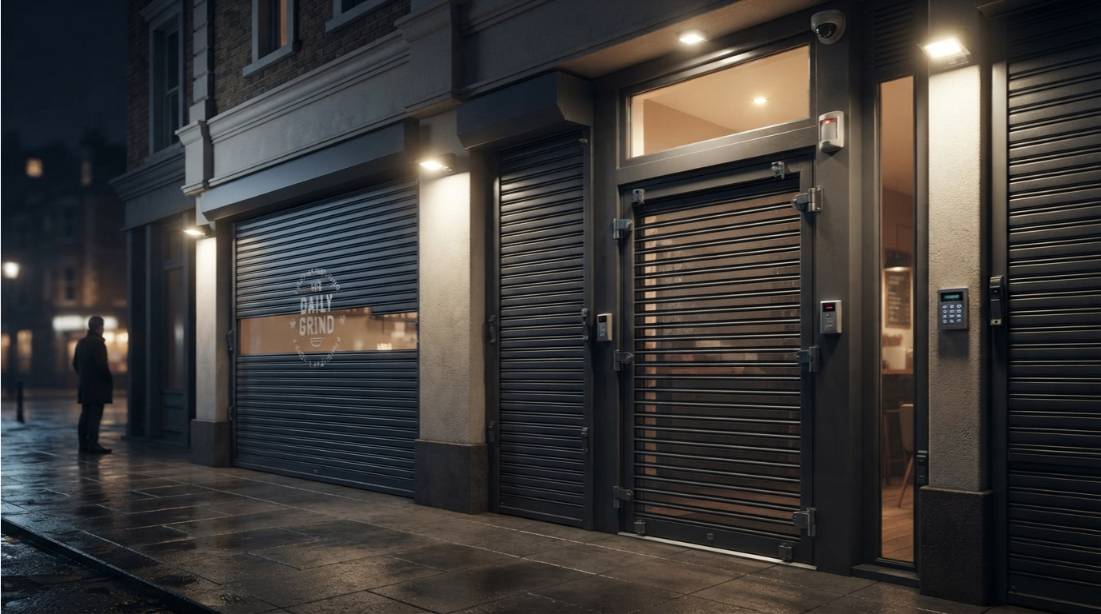
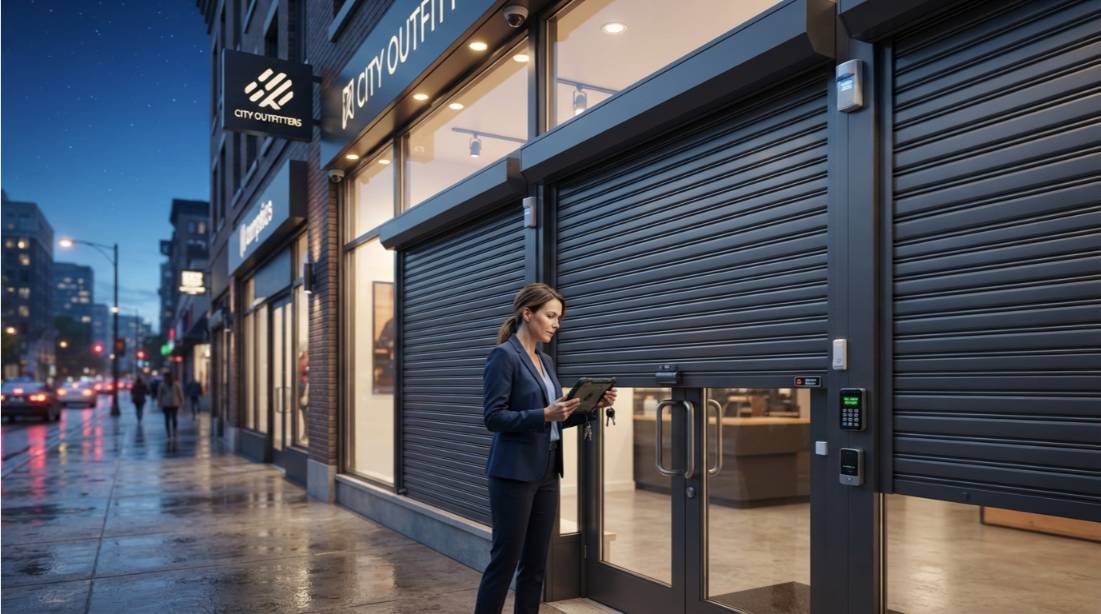
This is why roll shutters and security shutters consistently rank as one of the most effective burglary deterrents for both homes and businesses. When a Talius security shutter is closed over a window or entry point, there is nothing soft to attack. No glass visible. No interior to scope. No lock mechanism exposed. A burglar looking for a quick win sees a property that requires serious effort and moves on.
Talius has been manufacturing these systems across North America for over 40 years, with more than 20,000 installations in residential, commercial, and institutional properties. The reason the product has that kind of track record isn’t marketing. It’s physics.
Why a Physical Barrier Outperforms Everything Else
It works when you’re not watching.
A camera needs someone to be monitoring it. An alarm needs someone to respond to it. A physical barrier doesn’t need anything from you. It’s effective at 2 AM on a Tuesday just as much as it is at 11 PM on a Saturday. Whether you’re home, at work, or three time zones away, the barrier is doing its job. That kind of passive, always-on protection is genuinely hard to replicate with technology alone.
It targets the right entry points.
Ground-floor windows are the entry point most commonly exploited in forced entry incidents. Doors, including sliding glass doors and patio doors, come in a close second. Garage door security is another area that homeowners chronically underestimate. Roll shutters can be fitted across all of these openings, creating consistent perimeter security rather than leaving gaps a burglar can simply walk around.
It removes the ability to case your property.
One thing premeditated burglars rely on is visibility. They want to see inside, to confirm valuables are present, that no one is home, that the layout is manageable. A closed security shutter eliminates that entirely. Combined with motion sensor lighting and outdoor security cameras, a property with roll shutters gives a potential intruder nothing useful to work with.
Building a Layered Security Approach
The physical barrier is the #1 deterrent, but the most protected properties don’t rely on any single measure. A layered security approach stacks multiple deterrents so that if one is worked around, others are still in play.
Think of it in three rings.
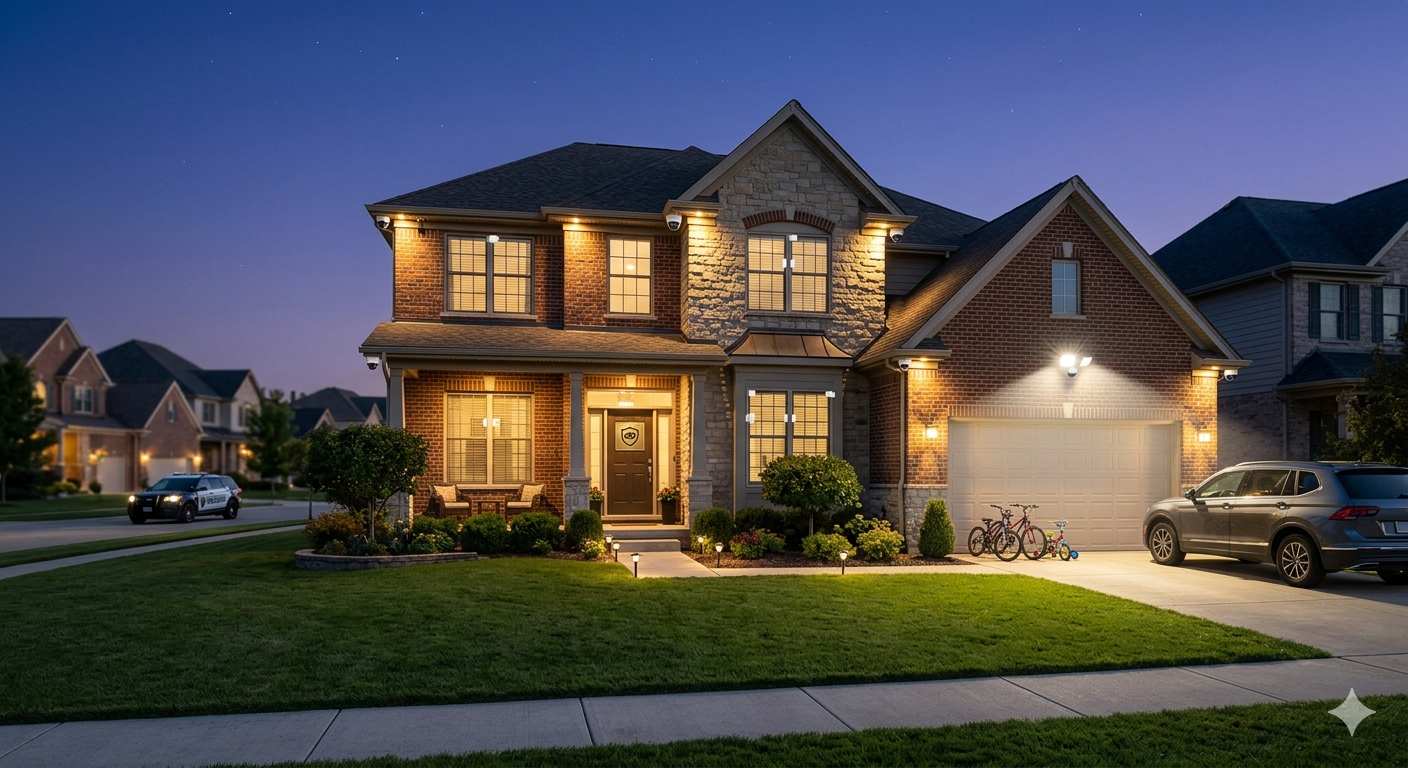
Perimeter. This is everything before a burglar reaches your building. Security fencing and security gates create the first physical obstacle. Landscaping and clear sightlines matter more than most people realize, overgrown shrubs near windows and doors create concealment that works entirely in a burglar’s favor. Trim them back. Motion sensor lighting floods dark approach paths and eliminates the cover of darkness that after-hours intruders depend on.
Entry points. This is where the physical barrier layer lives. Roll shutters and security shutters over windows, doors, and patios. Reinforced doors and windows with quality frames and hardware. Deadbolt locks, ideally a double-key deadbolt on any door with adjacent glass paired with a lock upgrade on any entry point still running basic builder hardware. Smart locks add remote access and real-time tamper alerts. Door and window sensors and glass break sensors cover the electronic layer.
Surveillance and monitoring. Outdoor security cameras with night vision capabilities and a wide field of view cover your exterior. A video doorbell camera handles the front door with two-way audio so you can interact with anyone approaching, or let them know they’re being watched. A home security system with 24/7 professional monitoring ties the whole network together, with remote monitoring via mobile app so you always have eyes on your property. A visible security yard sign signals to opportunistic burglars that the property is actively monitored before they even step onto your driveway.
The Habits That Reinforce Everything Else
Security isn’t only about hardware. A few behavioral habits close gaps that even the best equipment can miss.
Create the appearance of occupancy. Most burglaries target homes that look empty. Light timers and smart lighting scheduled to switch rooms on and off after dark go a long way toward maintaining an occupied home illusion. Leave a radio on. Keep a car in the driveway when you can.
Be careful with social media. Social media oversharing is more of a burglary risk than most people take seriously. Posting vacation plans, travel dates, or photos of expensive new purchases publicly hands premeditated burglars exactly the information they need. Post the holiday pictures when you’re back home.
Secure your valuables inside. A fireproof safe bolted to the floor or built into a wall makes the worst-case scenario significantly less damaging. Keep documents, jewelry, and cash out of sight from windows, a burglar scoping your property from the street shouldn’t be able to see what’s worth taking.
Get to know your neighbors. A neighborhood watch doesn’t require formal organization. It just requires that the people around you know what your property normally looks like and feel comfortable flagging suspicious activity when something feels off.
Don’t forget your mail. Mail and package theft is often a precursor to residential burglary, it signals that a property is unattended and gives thieves personal information. A secure mailbox, signature-required deliveries, and a trusted neighbor collecting parcels when you’re away all reduce the signal that your home is an easy target.
Frequently Asked Questions
What is the #1 deterrent for burglars?
A visible physical barrier is the most consistently effective deterrent, specifically one that covers vulnerable entry points like windows and doors. Roll shutters and security shutters are among the strongest options available for both homes and commercial properties.
Do cameras actually deter burglars?
They help, particularly against opportunistic burglars who don’t want to be identified. But cameras work best as part of a layered security approach. A determined intruder can move quickly and cover their face. A physical barrier stops them before that choice even gets made.
When do most burglaries happen?
Most break-ins occur during the day, mid-morning through early afternoon, when homes are empty. After-hours intrusion does happen, but the data consistently shows daytime is when most residential burglaries take place.
Does a home alarm deter burglars?
An alarm system disrupts timing and draws attention, which matters. But burglars who know what they’re doing can complete a grab in under ten minutes, often before any response arrives. Physical barriers prevent entry from happening in the first place.
Are roll shutters worth it for home security?
Consistently, yes. They reinforce the entry points most commonly exploited in forced entry incidents, block interior visibility entirely, and work passively around the clock. For both residential security and commercial storefront protection, they’re one of the strongest investments in the physical barrier category.
The Answer Matters Less Than What You Do With It
The #1 burglar deterrent is a physical barrier, something that makes forced entry slow, loud, and obvious enough that a risk-averse burglar chooses a different property. Layer that with smart lighting, quality locks, surveillance cameras, and consistent habits, and you’ve built a security profile that very few burglars will bother testing.
Talius roll shutters sit at the center of that physical barrier layer covering windows, doors, and storefronts with reinforced protection that’s been trusted across North America for over four decades. If you’re serious about residential security or protecting a commercial property, speak with an authorized Talius dealer for a free quote and find out which solution fits your openings.
The Right Shutter Starts With Knowing What You Need
At the core of it, roller shutters and security shutters solve different problems. One is about making your space more comfortable, efficient, and private. The other is about making it genuinely hard to get into. Getting that distinction right before you buy is what makes the difference between a shutter that serves you well and one that gives you a false sense of security.
Talius has been manufacturing roll shutters and security solutions across North America for over 40 years, with 20,000+ installations behind us. Whether you’re a homeowner looking for smarter window protection or a business owner who needs serious storefront security, we’ll help you find exactly the right fit. Get a free quote from an authorized Talius dealer today.